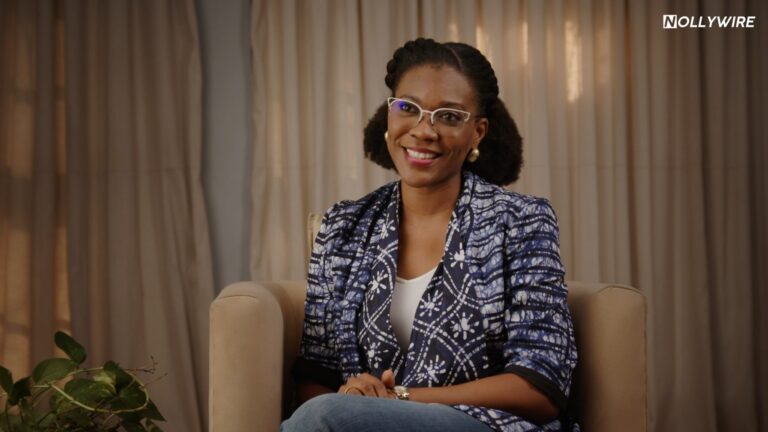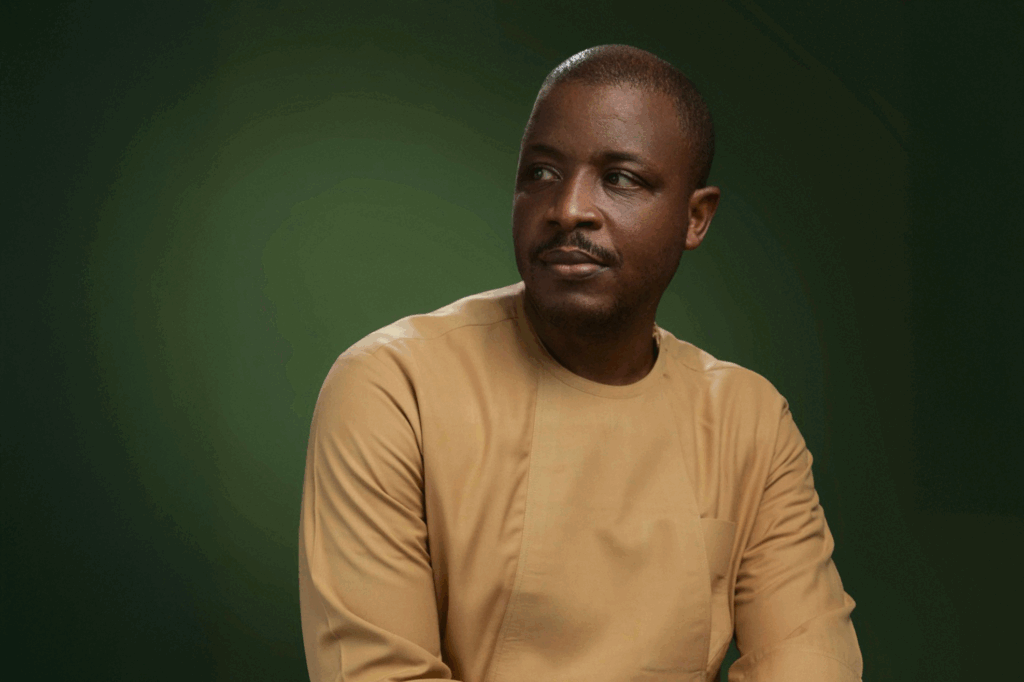
Lani Aisida is a name many Nollywood audiences first came to know through his web series days. From ‘Marriage Counsellor’ to ‘Oga Pastor’, he was part of the wave that helped shape Nigeria’s digital storytelling era which led him to being dubbed him “King of Web Series”. Over time, he built a reputation as a writer and showrunner, helming beloved series like ‘Love Like This’. Today, through his production company African Stories Untold, Aisida is expanding that legacy, creating films that mirror the company’s name—stories rarely seen on African screens.
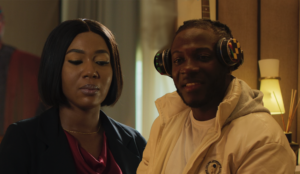
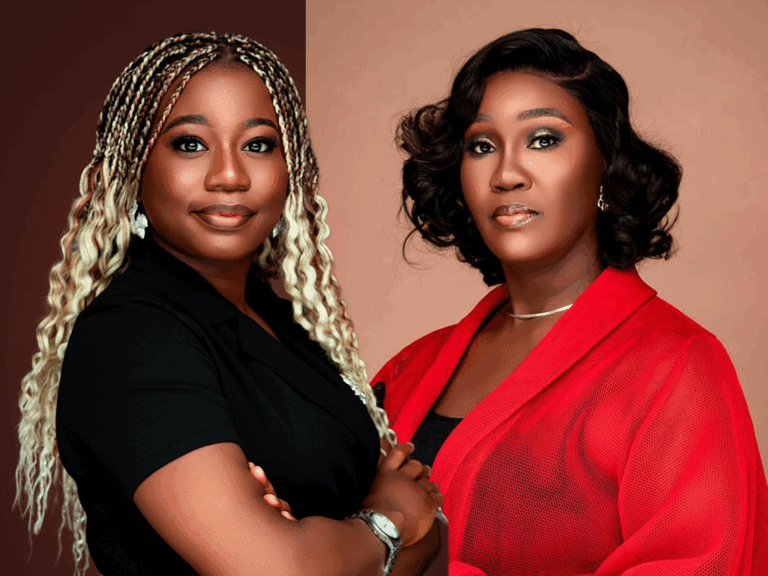
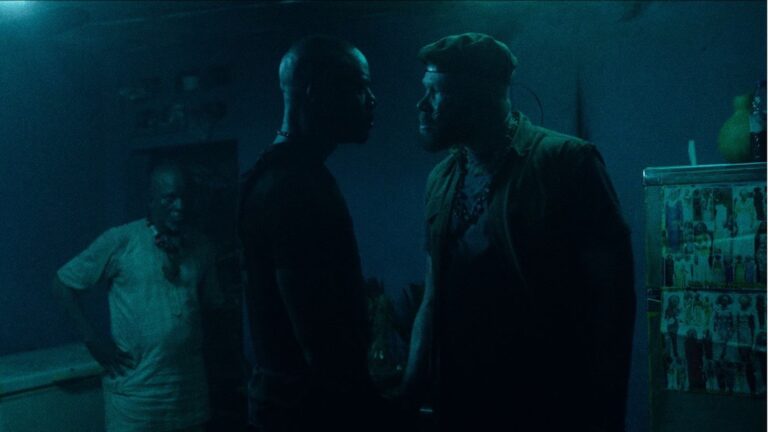
His latest project, ‘Say Who Die’, is one such story. The dark comedy centers on twin sisters whose bond unravels when hidden betrayals and long-buried secrets surface, setting off a chain of chaos. The cast features Oiza Abu, Meyi Abu, Baaj Adebule, Mike Afolarin, Tony Tetuila, Evaezi, Eve Bankong, Eva Ibiam, Folaremi Agunbiade, and Olakunle Fawole. Directed by Paul Utomi and produced by African Stories Untold—with Derin Adeyokunnu and BB Sasore as executive producers—the film is part of Prime Video’s 12-title licensed slate with Nemsia Studios. It comes to Prime Video on August 29.
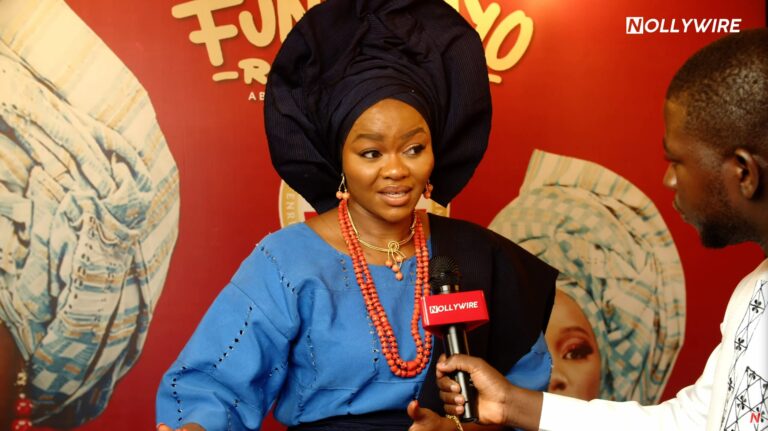
Nollywire sat down with Lani Aisida to discuss ‘Say Who Die’, from halting production for a month after an on-set accident to the risks of blending dark comedy with family drama, the challenges of casting real-life twins, and how Nollywood can tell authentic stories that resonate both locally and globally.
You’re best known as a writer and showrunner, but with ‘Say Who Die’ you fully stepped into producing. What made you take that leap, and how did it change your understanding of making a Nollywood feature?
I started off as a writer, like you rightly said, and then eventually I wanted more. I was trying to explore what that “more” would be. At first I considered directing, but I soon realized that wasn’t what I wanted. What I did want was to build my own production company. That’s how African Stories Untold started.
We began with a docuseries, then produced ‘Love and Light’; for Africa Magic, then Deeper, and now this; our first feature film. Before, I’d mostly functioned as a showrunner, which is a role tied more to series. But this project was on a bigger, more international platform, so we knew we had to put our best foot forward. It came with challenges, but we are here now.
Dark comedy is a bold choice in Nollywood. What gave you confidence audiences would embrace ‘Say Who Die’, and did you ever worry the balance between dark and funny might tip too far?
This was a risk. But until you venture into the unknown, you don’t know what you’ll find. It’s a story I’d wanted to tell for a while, and I had to decide the best vehicle; is it a book, a skit, a series, or a movie? Eventually I realized this was the best platform.
I consume dark comedy as a viewer and love it, but making it is hard. Some jokes will fly over people’s heads, some won’t. But I knew that at the core, people would feel something watching it. We also wanted to treat it as a genre we can keep exploring and improving on.
One big conversation we had was about the pacing of ‘Say Who Die’. On paper, the script was one thing, but once you start shooting, you see how fast it feels. From the first scene there’s conflict, and it just keeps going. Then a major incident happens in the story—and we didn’t want to just gloss over it. We had to slow things down, let it land emotionally, while still maintaining humor. That balance was tricky but important.
I also know that sometimes Nollywood makes films for the extremely rich or the extremely poor. But I’m not either; I know “normal” families. So I wanted this to feel like a story about a regular, middle-class Nigerian family that everyone could connect with.
The twin dynamic—Odion as the black sheep and Omon as the golden child—captures Nigerian ideas of family pride, favoritism, and hidden dysfunction. How did you and the team approach making those themes universal while staying rooted in local realities, and did you personally connect with either side of that sibling relationship?
Given my background as a writer, I was also the writer on ‘Say Who Die’, it was easy to blend those things. At some points the “writer me” was more present, at other points the “producer me” was.
My mom is a twin, and my two aunties—Omon and Odion, whom the characters are named after—were also twins. Sadly, both have passed on now. But growing up, I was always surrounded by those conversations and dynamics.
When I build characters, I like to hit the sweet spot: good people doing bad things for good reasons, or bad people doing good things for the wrong reasons. It creates conflict for the audience; should they sympathize or condemn? That tension makes the characters compelling.
I’ve also seen the way family dynamics shift in Nigeria. Sometimes the “black sheep” ends up being the successful one, while the “golden child” doesn’t fulfill expectations. And because of money, society flips how they’re treated. That reversal fascinates me. It makes you question: who determines who’s good, who’s bad, who’s successful? The action, or the intention behind the action? That’s at the heart of Odion and Omon’s story.
Odion is such a big, chaotic presence, yet her vulnerability is what makes her unforgettable. From a production standpoint, what were the non-negotiables in casting and design to capture that complexity? Can you share a moment on set where you knew the production choices had brought her to life exactly as you envisioned?
We wanted audiences to be immersed, and part of that meant casting against type, avoiding faces people already associate with certain roles. One of our earliest decisions was to see if we could cast actual identical twins instead of one actor playing both roles.
That led us to Oiza and Meyi, who were recommended by Tope Tedela for ‘Say Who Die’. They did a read, we liked them, but of course we wondered, could they sustain a feature? Oiza, who played Odion, had a theater background, which gave us confidence in her discipline. Then we found out their mother is Eugenia Abu, the legendary newscaster, so they grew up around performance and storytelling.
On set, especially one of the bedroom scenes early in the shoot, I watched them and felt no fear about whether they could pull it off. They were natural. Their real-life twin bond added authenticity, even tweaking lines to reflect how twins might actually behave. Their dry humor, their chemistry, it all made the story stronger. In that moment, I believed we’d made the right choice.
You’ve had work screened at TIFF and on Netflix, so you’ve seen how Nigerian stories can travel. With ‘Say Who Die’, what strategies or considerations did you put in place to make the film both exportable and still deeply Nigerian? And how do you navigate the tension between what “sells” globally versus what feels authentic locally?
For me, it starts with authenticity. If you placed this story in Manhattan, it wouldn’t work, it only makes sense here. That’s the point: let people in Brazil or the U.S. learn about us through our stories, the way audiences learned about Korean culture through Squid Game.
And when I say culture, I don’t just mean traditional attire and customs. Modern Nigerian life is culture too; our way of speaking, hustling, navigating relationships. Those everyday layers deserve to be shown.
We also ran a focus group before production, with actors, writers, film lovers, and even twins. People connected with different aspects of the script, which reassured us that the story could resonate broadly.
As for the global versus local tension, I’ll be honest, I focus first on the people financing the film, then on the local audience. If Nigerians at home connect deeply, the diaspora will amplify it. I know this from experience living in the UK: I consumed Nigerian stories even more while away, because I missed home. If diaspora audiences feel that, they’ll bring in their friends from other communities. That’s how a story grows organically.
Every production has its war stories. What was the biggest crisis or unexpected hurdle on ‘Say Who Die’ whether money, scheduling, or creative tensions and how did you resolve it in a way that still protected the heart of the film?
Things were going so smoothly at first that we thought we’d even wrap a day early. Then an actor had an accident. We had to shut down, take her to the hospital, and pause for almost a month.
The challenge was rescheduling, by then, many actors had moved on to other productions. We had to rewrite around one person’s absence and adjust without compromising the story.
What saved us was having a strong, committed team. The cast and crew shifted their schedules to make it work. Honestly, the biggest compliment I can give them is that no one watching the final film will ever guess that disruption happened.
The lesson I take forward? Have good people. You can’t always pay people enough, but if you’re fair and decent, they’ll stay committed. They’ll help you patch the cracks. That’s what kept us going.
Lani Aisida is known as the “King of Web Series” and are now producing features that push Nollywood into less-explored genres. With ‘Say Who Die’, do you see yourself intentionally curating a certain type of film legacy as a producer? And what responsibility do you feel, if any, to open doors for younger producers and storytellers coming behind you?
I want to look back on our catalog and be proud. I want my kids to be proud. That means telling authentic stories, not painting Nigerians with one brush, but showing our complexity beyond the three dominant tribes, beyond stereotypes.
That’s why my company is called African Stories Untold. We want to represent unspoken voices, not in a preachy way, but through entertaining formats. People assume that means political stories, no, it’s just about honesty and authenticity.
As for younger filmmakers—I believe I have a responsibility. I’ve taught writing classes in the past, though I didn’t publicize them because I didn’t realize social media was currency back then. About 40 students went through those classes. Now, I think giving back means producing work by others.
Our first show, ‘Love and Light’, wasn’t created by me, and that was a proud moment because it gave another writer their first “created by” credit. On ‘Say Who Die’, we also had interns and emerging talent working alongside us. We’re a young company, so why not grow horizontally with other young creators who share our vision and tenacity?