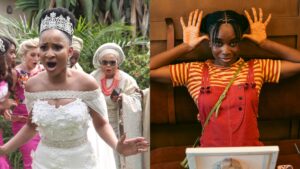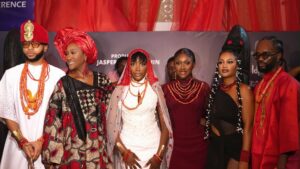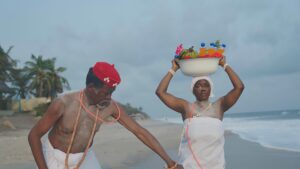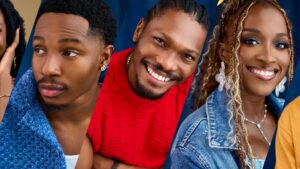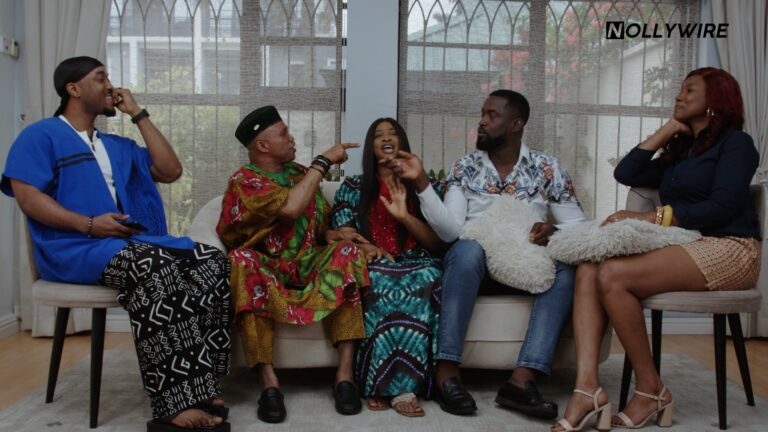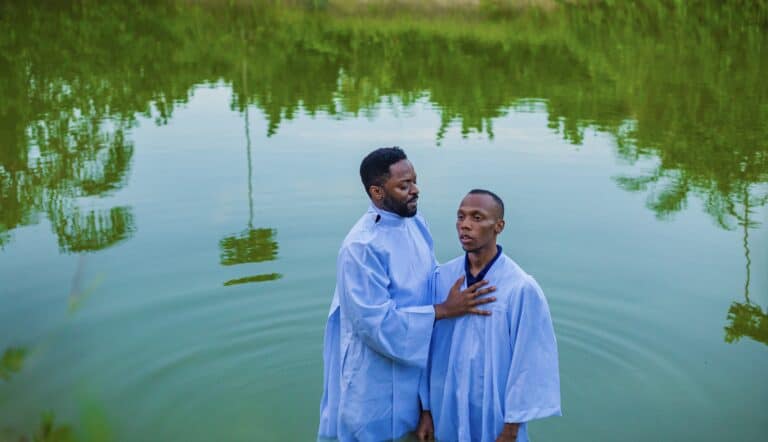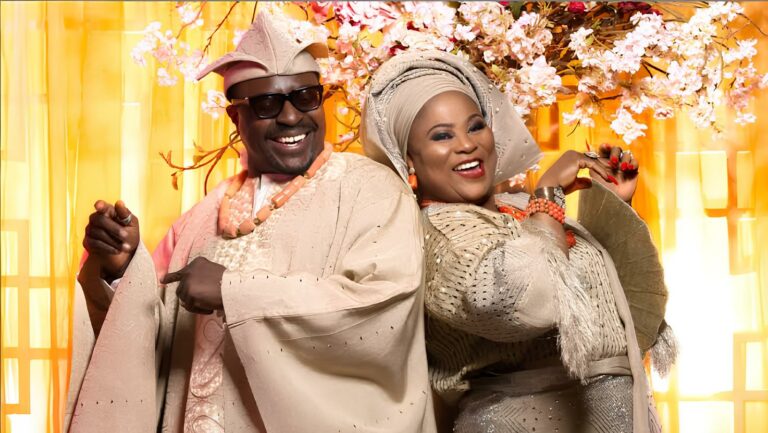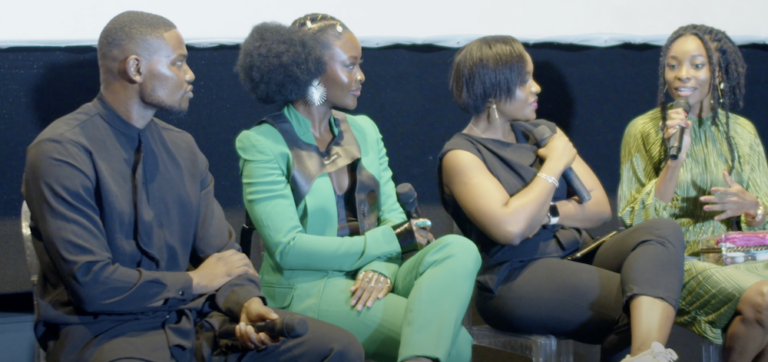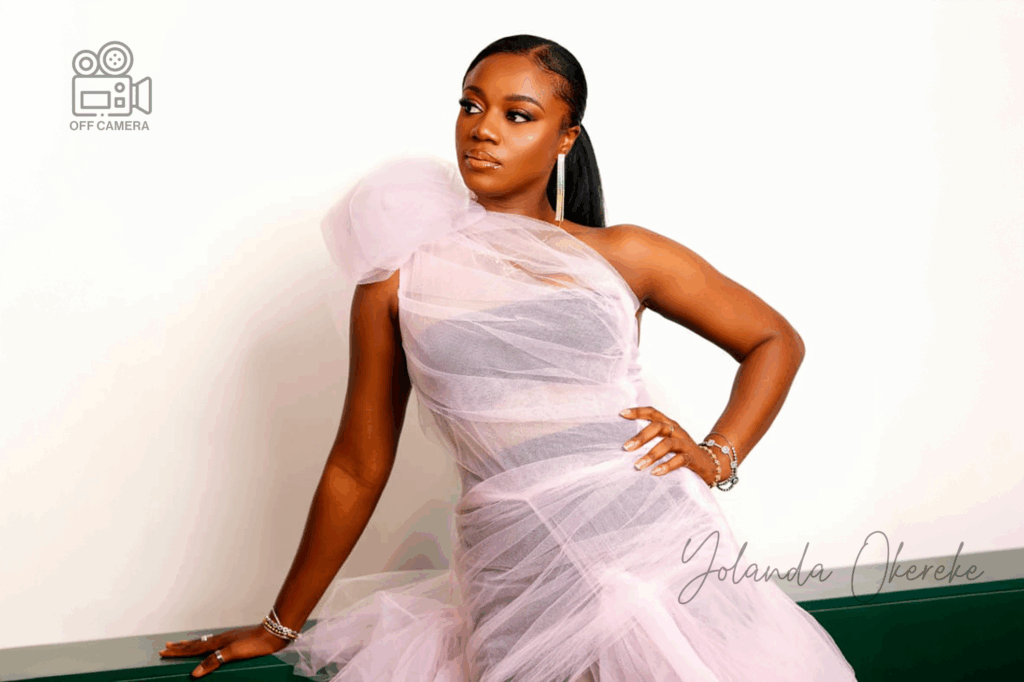
Yolanda Okereke may work behind the scenes, but her costumes are often the first thing audiences remember. From the commanding matriarchal silhouettes of ‘Blood Sisters’ Lady Uduak to the crisp, perfectly tailored uniforms of ‘Far From Home’, she has been quietly shaping some of Nollywood’s most memorable on-screen looks. Yet her path to costume design was anything but conventional.
She started out with lofty dreams of becoming an engineer, later developing an interest in architecture. But the misogyny of STEM hit early and hard; “girls can’t do it,” she was told. That didn’t dim her creative instincts. Drawn to storytelling, she tried out acting, but it didn’t quite fit. What she realised instead was that her real place was at the backend of filmmaking, helping characters look good, grounding them in the world of the story through what they wore.
Today, she is one of Nollywood’s most sought-after costume designers, known for her attention to detail, rich character research, and an ability to translate a script’s vision into a visual language of fabrics, colours, and silhouettes. In this edition of Off Camera, Yolanda Okereke takes us inside her meticulous process — one that can stretch from a few months to over a year — her unexpected journey into costume design, and how she’s helping to shape the growing costume design landscape of Nollywood.
Let’s start with the pivot, how did a Chemical Engineering graduate find herself in costume design and fashion styling? What drew you in?
Two things. Nigeria happened to me because nobody goes into school to study a course as hard as chemical engineering and not want to practise as one. I always knew I was going to do something on my own, but I really did want to be an engineer, originally an architect. In school I wanted to change from chemical to civil so I could do my masters in architecture and blend in. But I was told engineering wasn’t for girls and I had a dean that frustrated me.
Somewhere in school, I started to lose the taste for being an engineer. I told myself if I was ever going to work as one, it would be a minimum of two years, a maximum of five years and I’d be done.
I’ve always liked creating. I’ve always liked painting. I read a lot of books; I have a library filled with so many books. I would always transport myself into this magical world where I painted a picture of what was supposed to be. Like my dad would say, it wasn’t far-fetched that I ended up being a fashion stylist.
Somehow, I pivoted towards being a costume designer because I always knew I was going to do film. Initially, I saw that as being an actress, but I knew that wasn’t me. I told myself there’s more to this space that I can give that’s not necessarily in front of the camera. I didn’t like the way people looked in front of the camera, and I didn’t think the stories were represented well visually.
From fashion designing, I found myself already in film. I started young as a child—’World of Children’ was my first movie with Charles Okafor, then ‘The Orphan’ with Teco Benson. I’ve always been in the art space. One day I said, “Acting is nice and fancy, but I want to help tell these stories better. I want to help the visual representation because we have really great stories.”
I was opportune to work on ‘Sting’, where I met Monalisa Chinda. From being a fashion stylist, that was where I pivoted into working in film. One day, as God would have it, I landed myself on ‘The Meeting’ set with Mildred Okwo and Rita Dominic’s movie. I’d already done one with Monalisa. That was a turning point; big scripts, big actors like Kate Henshaw, Femi Branch, Femi Jacobs, Kehinde Bankole, and even Chinedu Ikedieze. We shot in Lagos and Abuja and that earned me my first AMAA.
At the time, it was still tricky. It still felt like I might dust off my CV and go back to engineering because being a stylist wasn’t profitable and being a costume designer was even worse at the time, as we were still a growing industry.
You’ve styled for some of Nollywood’s biggest blockbusters. What’s the first thing you look for when designing costumes for a character?
Like you said — characters. Who are they? Where did they come from? What’s their personality? How does the costume speak to them? How do they carry it? Do they embody who these characters are? How does what they’re wearing help them embody the role?
The colour palette of the film is very important. The genre is very important. Is it comedy, action, or drama? That determines the palette. Once you get that right, it becomes easier.
Who is the cast? You make sure you’re dressing them according to their body frame. What is the backstory of the character? Backstory is very important. Who are you? What do you do? What do you like? What do you love? What’s your relationship with your friends? All these things go into the character bible. It tells you, for example, “this is a fun-loving person who likes the beach,” and that influences fabric and styling choices.
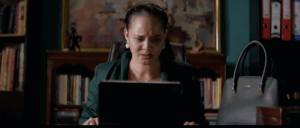
As much as they are characters in a movie, they’re also like real people. A world is created to allow them to exist in that space and become. Once the character can “become”, it’s very important. Imagine Kate Henshaw stepping away from being Kate and becoming Lady Uduak in Blood Sisters. If I dressed her as I would for Kate Henshaw, the celebrity, it would never translate. But when you put her in heavy matriarch clothes, the moment she steps into them, she becomes.
I design based on where the character is going, to the DPO, a party, or a dinner. When she walks through the door, who does she say she is? Someone beaten and battered will not be wearing a Gucci shirt.
So the first thing I look at is: Who is this person? Where are you coming from? Where are you going? What is the essence of who you are? I treat characters like real people. Even in real life, with people like Ebuka or Toke Makinwa, I ask: do they relate to the character I’m dressing? For every movie, there’s someone in real life who’s like that.
I’m a product of my environment, and I change my location depending on the project to influence my creativity. Some projects have taken me a month to create a lookbook that says “this is the visual representation.” I can’t do a lookbook in 48 hours and give my best. The costume has to allow the actor to “become” the character.
What’s the longest time you’ve taken to prepare costumes for a project?
It depends on the pre-production time. Some are one month, some are three. For ‘Far From Home’, we had about a four-month pre-production just for making outfits, not counting budgeting or lookbook approvals. We made over a hundred pieces of uniform, from shirts to pants, football jerseys, ties, and badges; some were even made outside Nigeria.
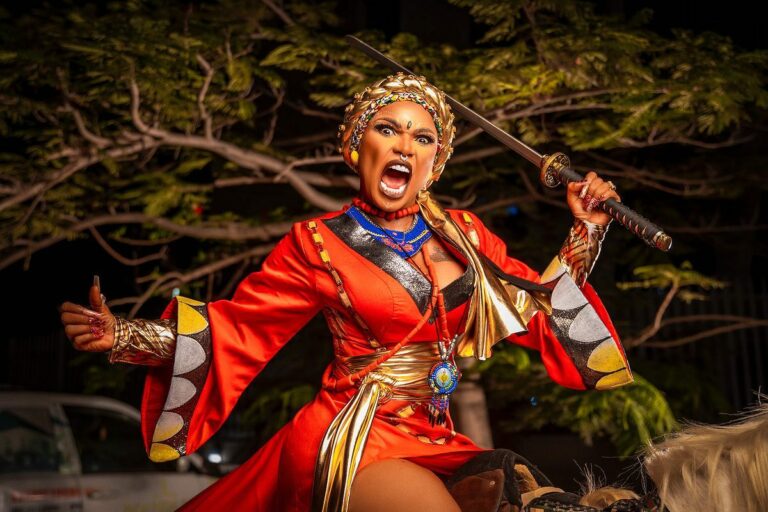
‘Blood Sisters’ was about two months. Uduak’s clothes alone took between 10 days and a month each because of hand-beading, cutting, and sticking patterns. I worked eye-to-eye with the designer to make sure everything was aligned.
For ‘Òlòtūré; The Journey’, I sourced half the costumes in the UK because we were shooting in Mauritania. My model is not two weeks prep; my minimum is one month, up to three months. ‘House of Ga’a’ took four months; ‘La Femme Anjola’ took over a year from approvals to sourcing fabrics, fittings, and rehearsals. Some projects, like ‘Baby Farm’, had complex uniforms that required me to think about style, colour, and how they’d read on screen. Excellence is all that matters.
A lot of people still confuse costume design with fashion styling. How do you define the difference, and where do they meet in your work?
Fashion design is entirely different; you’re catering to a client, making an outfit for an event: birthday, political event, or red carpet. Costume design is for film. You’re not dressing the cast as themselves; you’re dressing them as characters.
If I design a dress for Kate Henshaw, that’s different from designing a dress for Kate Henshaw as Lady Uduak. For film, you tailor according to the story, the film’s look and feel, the colour palette, the location, and the character. It must be organic to who that character is.
You’ve worked across genres: political drama, romantic comedy and and historical epic. What story or character has challenged your costume instincts the most, and how did you work through it?
‘Blood Sisters’, I can’t lie. I’ve worked with Kate Henshaw for 10 years, so I didn’t know what we were going to do. It took me a while to decide on her look, but knowing she’s a great actor, she carried it.
Rita Dominic in ‘The Meeting’ played an old secretary. We had to age her, so I dug into my mom’s old trunk from the ’80s to find clothes. I did the same for Toni Tones as young Eniola in ‘King of Boys’.
There was ‘Something About The Briggs’, where I had to dress 12 really stylish people; that lookbook alone took me a month. ‘House of Ga’a’ was a period piece; ‘Seven Doors’ had wedding, coronation, and village arrival scenes that required dressing large numbers of people. Almost every film I’ve done has challenged me, and I aim to make each one memorable.
Can you tell us about a wardrobe choice you made that completely shifted how an actor saw their character?
In ‘King of Boys’, Sola Sobowale and Adesua Etomi as Eniola and Kemi Salami, people were intrigued, and it helped them embody those strong characters. Kate Henshaw as Lady Uduak in ‘Blood Sisters’ – nobody had seen her look like that before, and it sent shockwaves.
In ‘La Femme Anjola’, we played with different African designs and textures to do something different. In ‘Baby Farm’, I created uniforms that made the girls feel like they were in prison without actually being in prison. These choices have lasted and helped actors “become”.
You’re a creative force, but you’re also building an ecosystem: mentoring, producing, and creating platforms. What drives that desire to do more than just design?
Education and giving people an opportunity. I didn’t have anyone to lean on, so I learnt by myself, bootstrapping along the way. I taught myself to the point where I am now because I got too busy to go to film school. Every movie I watch is like a course for me; I learn, and I see what I can do differently or better.
It’s important to have an ecosystem where you can share knowledge you’ve attained over time. That’s why I created The Master, a costume design masterclass where I teach, pass on knowledge, and select interns for projects. Many people DM me wanting to work, but most don’t have the know-how. The gap I had to fill for myself, I want to fill for them.
If I can create the next Yolanda, that would be amazing. To do modern design is to teach, educate, support, encourage, and build to create a tribe of young designers who will do more than I have.
Finally, If you could design costumes for any kind of film that hasn’t been made in Nollywood yet, what would it be?
Sci-fi. I’d really like to design something for sci-fi. It’s very intriguing; you watch stuff like ‘Star Wars’ and ‘Star Trek’, those kinds of shows with space suits and stuff like that. It’d be really, really, really nice to design something like that. That would be really challenging and different because all these things need different materials.
Like ‘The Avengers’, I find their costumes very intriguing. The kind of fabric that’s used in the fabrication and creation of those pieces is very intriguing. Yes, those kinds of movies are what I’d like to design for.