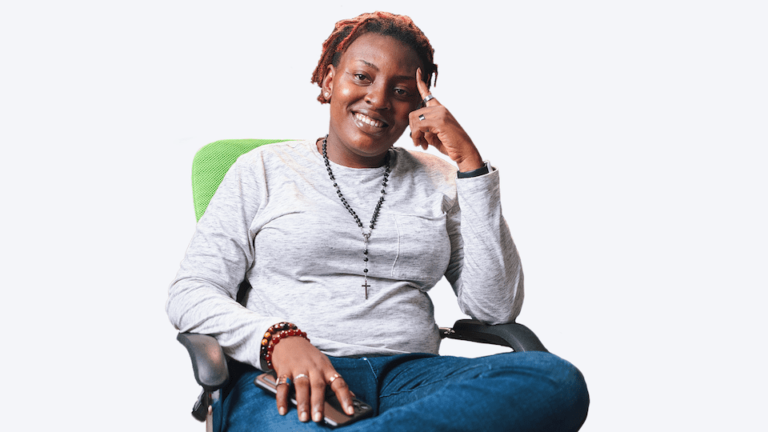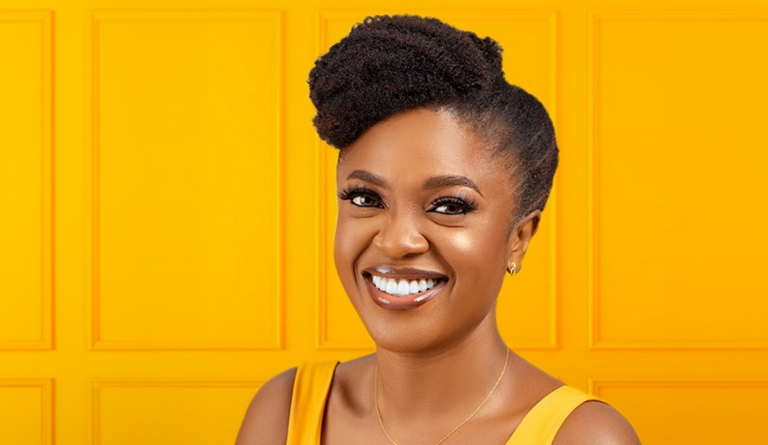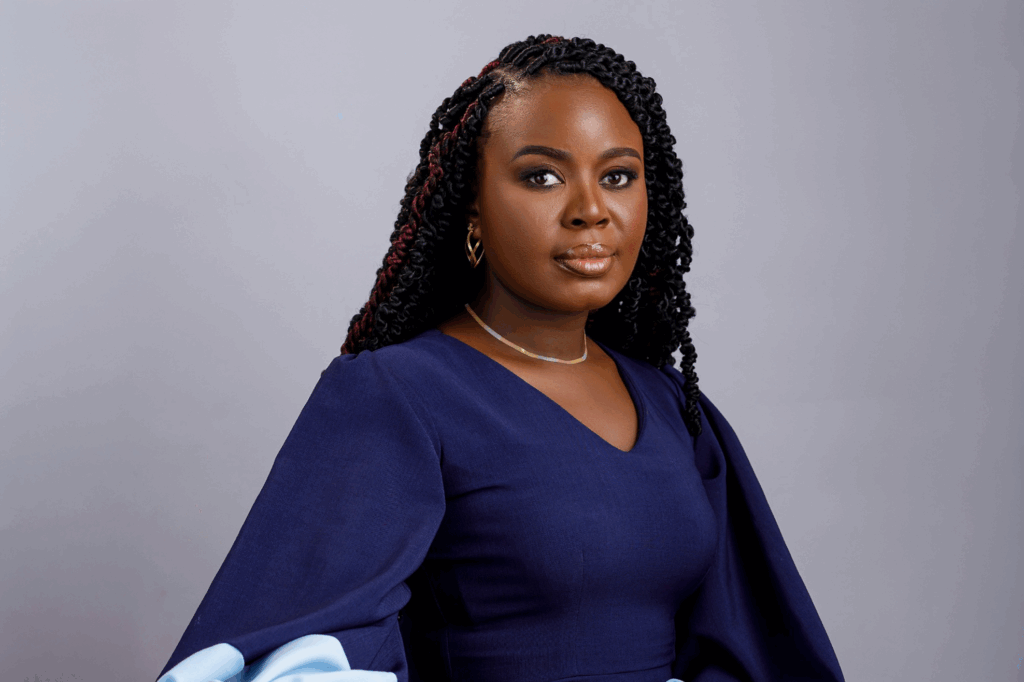
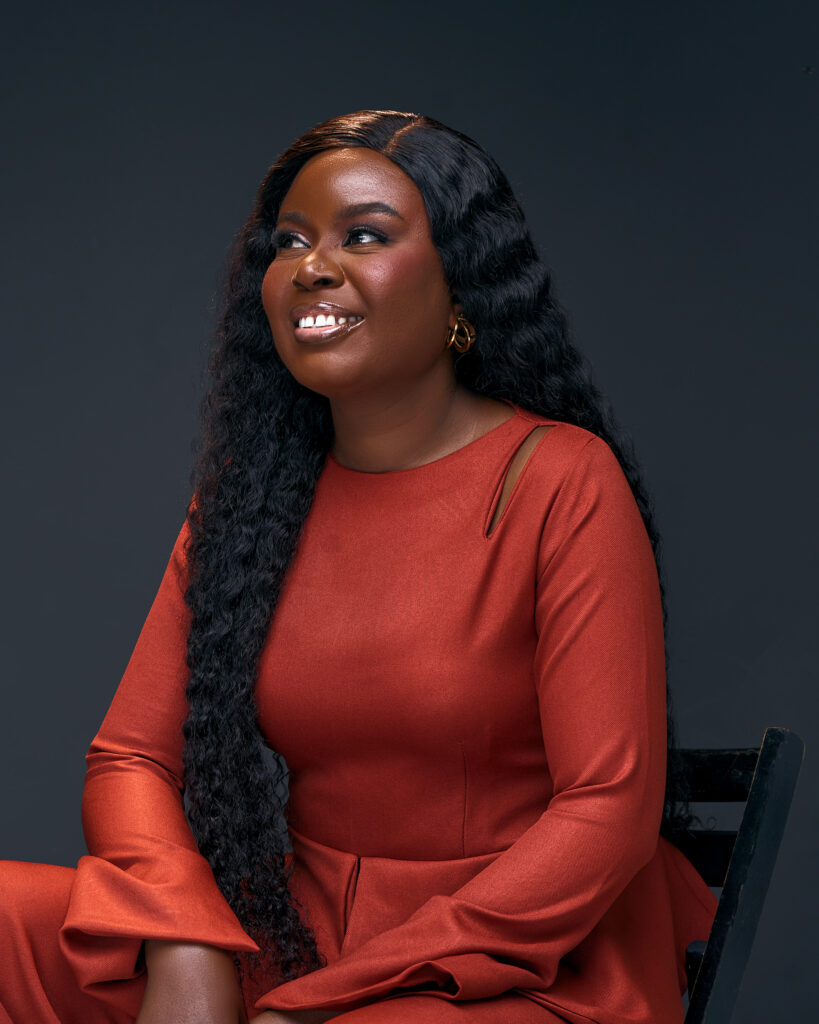
Every superhero has a mission. For Omotayo Inakoju, it is protecting Nollywood one contract, one copyright, and one filmmaker at a time. Where many filmmakers might overlook the fine print, she sees the future of their work secured through copyright, contracts, and clean chains of title. Her mission is simple but powerful: to make sure the films being made today can stand, profit, and be protected for years to come.
Her own path into film law was shaped by a mix of defiance and chance. Her father, a practising lawyer, wanted her to study medicine after she excelled in science subjects. “He took me to class one day to drop my desk in science class and I just carried it back to arts without arguing with him,” she recalls with a laugh.
That quiet decision led her to law school, and later, while doing her master’s in Lagos, a call from a friend at Silverbird opened the door into the film world. “I found myself learning about distribution and exhibition. And I thought if I can understand the entire chain of the film business, that would position me as an expert in this field.”
Unlike entertainment lawyers who mostly focus on music, Inakoju noticed a gap in film. “I hardly saw anyone position themselves as a film lawyer. There was a lacuna people weren’t paying attention to, and I was in a good position to fill it,” she says. That decision has since defined her career, making her one of Nollywood’s few dedicated film lawyers, a role she embraces as equal parts educator, protector, and partner to filmmakers.
Many also know her beyond the courtroom and boardroom: through her lively Instagram videos and educative carousel, where she breaks down dense legal jargon into practical advice for both upcoming filmmakers and industry veterans. By translating the law into plain language, she has become not just a lawyer behind the scenes but a visible guardian of Nollywood’s future.
In this edition of Off Camera, Omotayo Inakoju reflects on what it means to run a legally protected film business, why copyright is the beating heart of cinema, and how she builds trust with creatives who often think of lawyers as obstacles.
When you started out, did you ever imagine yourself making films rather than protecting them legally? Do you still have any creative itch to write, direct, or produce?
For me, it was always more about protecting what people are creating. I understand the business side of filmmaking, the resources, the creativity and the finances that go into even a forty-minute film. Knowing that makes me more motivated to do what I do. I’ve never really had the urge to make films. Maybe in the future I could executive-produce or invest in a production, but right now my focus is on protecting people’s intellectual property and their investments. I do write, but only for educational purposes, not the core creative writing.
Being a film lawyer isn’t a path most law students are exposed to. What hurdles did you face in carving out this niche, and how did you build credibility in an industry that often doesn’t fully understand its own legal needs?
Finding myself in film was by chance. But once I saw the opportunity, I deliberately positioned myself. I worked six years at Silverbird learning distribution and exhibition, then made sure I also understood production. I started working with producers, asking them for contract templates, learning what agreements looked like. By the time EbonyLife came along, I was ready. I knew there was a need because everybody knew about music lawyers and entertainment lawyers but hardly anyone called themselves a film lawyer. That was the gap I chose to fill.
When people hear ‘film law’, they often think only of contracts. Could you break down the full scope of what it covers, from development through distribution and maybe share a situation where legal input completely changed the course of a project?
People think film law ends with contract drafting but what’s the essence of a contract? It sets out obligations, mitigates risk, and protects intellectual property. And filmmaking revolves around intellectual property. So it goes beyond drafting. You need to think of legal structures; should your company have a business name? An LLC or an SPV for each production? That decision determines how much risk comes to you personally.
You need agreements with writers, financiers, and actors. You need permits for outdoor shoots in Lagos. You need insurance because actors get injured, and hard drives crash. You need script clearance to spot defamation, trademark infringements and even character names that are already trademarked. Tyler Perry once had to change the title of a film on Netflix because of trademark issues.
Then there’s censorship, distribution contracts, and licensing deals with streamers. It’s a whole chain. And I’ve had cases where a producer was about to use a character name already trademarked. We changed it in time and avoided a lawsuit. Or financiers who assumed putting money into a film gave them copyright ownership; I had to make clear that investment doesn’t equal IP rights.
Copyright is one of those invisible threads that holds film together. What are the biggest misconceptions filmmakers have about copyright, and how do those misunderstandings come back to bite them later?
Copyright is the bedrock of filmmaking. It gives you both monetary rights—to monetise, license, distribute, sell—and moral rights, like claiming credit and preventing misuse. The biggest misconception is thinking that because you paid for work, you own the copyright. No, the writer or creator owns it until they sign it over.
Another is believing that because copyright is automatic, you don’t need registration. Yes, it’s automatic once you create, but registration with the Nigerian Copyright Commission gives you a certificate, evidence in court, and public notice.
And then people think copyright lasts forever. It doesn’t. For scripts, it lasts for the author’s lifetime plus 70 years. For films, only 50 years after release. That’s why I tell filmmakers to copyright their script separately from their film. That way you enjoy double protection.
Ideas are slippery things in film. Legally speaking, what’s the line between ‘owning’ an idea and ‘owning’ a finished screenplay or film?
Ideas can’t be protected. They are intangible and free. The law only protects execution. Once you put an idea into a tangible form, write it down, record it, and it becomes protected. If you don’t, even if a million people have the same idea, there’s no way to prove or protect it. It’s about encouraging execution. That’s why two people can have the same story but execute it differently—as a book, as a film—and both are protected.
Streaming has shifted everything, from how films are financed to how they’re consumed. What new legal complexities have emerged with global platforms acquiring African films, and do you think our laws are catching up fast enough?
Streaming is an answered prayer because distribution was always limited. But it comes with challenges. Streamers want global exclusivity, but that can restrict producers if the platform doesn’t have reach in certain regions. That’s why negotiations matter; maybe give one platform African rights and another European rights.
Revenue models are also different. Cinemas share weekly earnings; streamers mostly pay a one-off licence fee, often in tranches. And they require a clean chain of title: actors’ agreements, music clearances, and editing rights. This forces our producers to be more structured, which is good. But overall, the streaming space is still a wild west. Negotiations depend on power, and the industry is largely unstructured. Hopefully, laws will catch up.
Filmmakers often see lawyers as people who just tell them what they can’t do. How do you approach building trust so creatives see you as a collaborator rather than an obstacle?
Lawyers are always seen as the bad guys, not just in film but in every industry. The key is to think like a filmmaker and investor, not just a lawyer. I explain contracts not as hurdles but as protection: clarifying rights, preventing lawsuits, and protecting their money and intellectual property.
I also show them how to future-proof their work. For example, if you trademark your film title or a character, you can later build a series or merchandise without fear. If you don’t, someone else could dilute your brand. Once they see that I’m aligning with their goals, to make money and protect their brand, they start to see me as a partner, not a hindrance.
For up-and-coming filmmakers working with little to no budget, what’s the one contract or legal step they absolutely must not skip, even if they can’t afford a full-time lawyer yet?
There’s no one-size-fits-all. Your needs depend on your production. But basics include writer’s agreements, finance agreements if you have investors, actor contracts, location releases, editor and soundtrack agreements, and distribution agreements. And never just use any lawyer; use one who understands film. Because contracts are all about negotiation, and if your lawyer doesn’t understand the business, how can they negotiate rights, risks, or liabilities?
That’s why I tell people: don’t call your uncle who’s been practising oil and gas law for 20 years. Get a lawyer who understands the film business.
Finally, if you could swap lives with a filmmaker for just one project, whose career would you want to experience from the inside, and why?
I’d choose my madam, Mo Abudu. When you’re counting top film executives in Nigeria, you have to count her. She’s consistently putting our industry on the international stage and presenting African stories not just as tales of suffering, but as rich, beautiful narratives that showcase our culture. I’d love to experience how she manages those budgets and attracts top creatives.