When Trino Motion Pictures turns 10 next year, the Lagos studio will be looking back at a decade of film production while also marking a major shift: from telling stories to building the systems that sell them.
Earlier this year, Nollywood International Film and TV Summit (NIFS) and Trino launched the International Sales & Distribution Executives Program (ISDE Program), a three-month residency and mentorship that included a flagship masterclass during NIFS Lagos 2025.
The programme is the first of its kind for Nollywood, designed not for filmmakers but for film business executives tasked with negotiating deals, localising content, and building relationships in global markets.
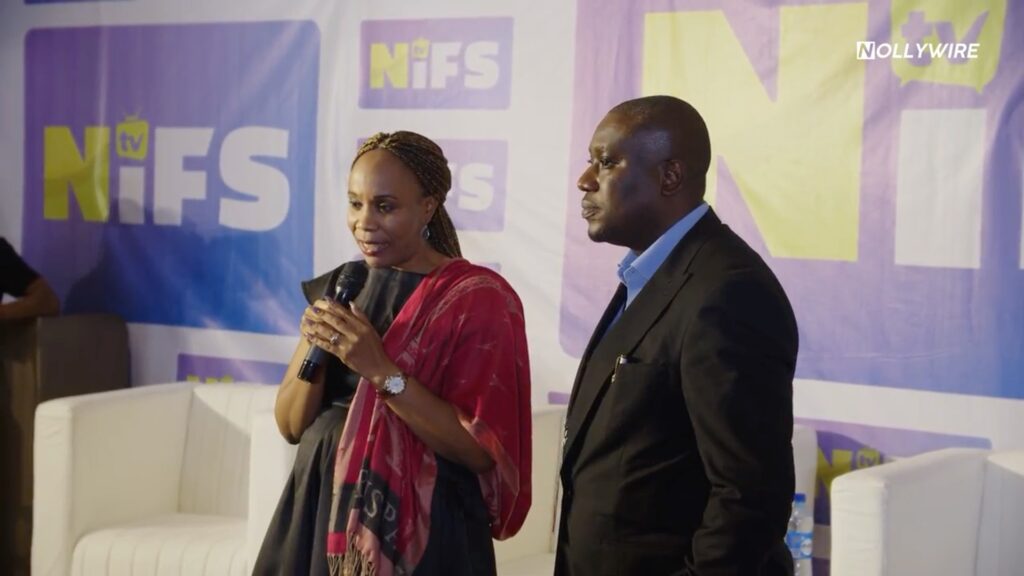
During the graduation ceremony of the ISDE participants at the just-concluded NIFS Lagos 2025, Trino Motion Pictures unveiled a content acquisition and sales division, a response to what CEO Uche Okocha describes as one of Nollywood’s most dangerous blind spots. Too many young filmmakers, he says, know how to make films but have no idea how to sell them, often calling his team for advice on how to reach distributors. The new division was created to fill that gap.
The first cohort of 12 graduates came out of the program with a clear mandate: shift Nollywood’s culture from passion-driven production to profit-driven distribution. Several participants admitted that they were headed down a path of making films with no commercial plan before ISDE. One graduate described the programme as a “veil removed”, realising that funding was never Nollywood’s biggest obstacle; distribution was.
This gap has surfaced repeatedly in Nollywire’s coverage. In our recent feature, we explored how platforms are creating new opportunities for filmmakers to monetise content. The ISDE programme builds on that shift, giving Nollywood executives the tools to not only negotiate better with streamers but also expand into theatrical, TV, and emerging global markets.
International facilitators reinforced the same point. In established industries, pre-sales and financing structures tie distribution to the very start of development. Nollywood, by contrast, often relies on personal funds or family support to make films, leaving distribution as an afterthought. For the new executives, the training reframed the process: films must be designed with audiences and distributors in mind from the beginning.
That recalibration also complements conversations happening on the creative side. When Biodun Stephen talked about Nollywood’s stereotype problem, she addressed the limitations of how stories are told and perceived. The ISDE programme approaches the same challenge from the business end, teaching executives how to present Nollywood films to buyers who are sceptical or audiences who are underserved.
By the end of the training, graduates weren’t just talking about selling films but about widening Nollywood’s reach. Whether by tapping overlooked local markets, such as audiences with disabilities, or targeting new buyers in Europe and beyond.
For Okocha, this first class of executives represents only the beginning. The programme will return in 2026, and Trino’s sales division is set to expand, creating more professionals dedicated to taking Nollywood content to market.
“It’s about building the ecosystem,” he said. “That’s what we want to continue to do.”