For many nollyphiles, the stories we watch don’t just end when the credits roll. They linger, especially the ones where a beloved character is suddenly taken from us. A death on screen can feel like losing someone we know—shocking, painful, and unforgettable.
Nkemakolam Akua, a dedicated nollyphile, shares with us the film death that completely shattered her, the scenes she can’t shake, and how those moments continue to haunt her memory.
Whose death in a Nollywood film or series left you gutted and what was the film?
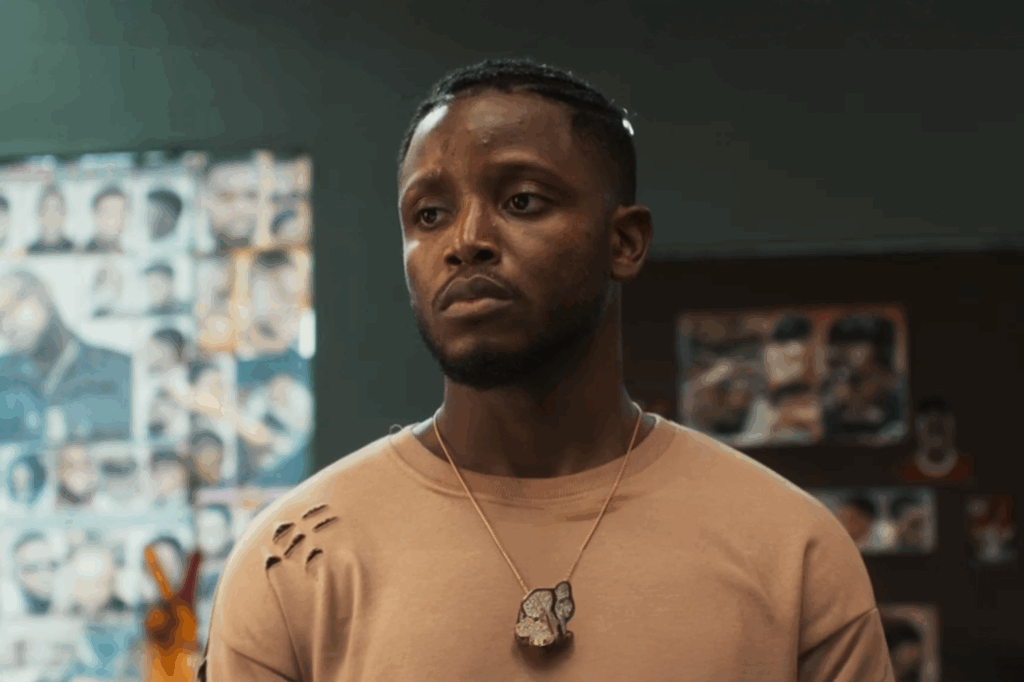
It was Pana’s death (Chike Osebuka) in ‘Gangs of Lagos’. That one really broke me. The way they killed him was so thorough and so ghastly—it was nasty work.
What happened in the scene? What did the moment look and feel like as it unfolded on screen?
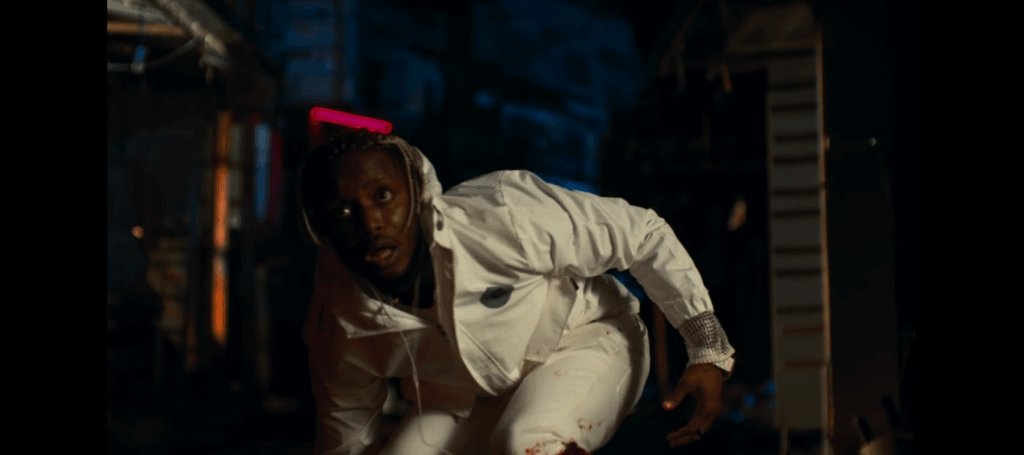
He had been sent by his boss, Superior, to kill a barber. But he couldn’t go through with it because deep down he was a good boy, a singer. And then, out of nowhere, some boys just caught him on the street and butchered him. They were using axes and machetes, cutting him in ways that left him unrecognisable. It was brutal to watch.
When did it fully sink in that the character was gone? Was it a single line, a reaction shot, the silence, or something else?
It hit me as they were hacking at him with the knives. I just sat there like, ‘oh my God.’ And what made it even more haunting was how it was edited. Side by side, while Pana was being butchered, there was another scene playing out—a sex scene between Tobi Bakre’s character and Bimbo’s character. Romance and intimacy on one side, sheer horror and gore on the other. That contrast really unsettled me.
What did this character mean to you before that moment?
Pana was the life of the party. He felt pure and innocent, a clear-eyed, non-violent person surrounded by hardened criminals. In the chaos of violence, he was like a symbol of comfort, someone who carried a different kind of energy. Losing him felt like losing the heart of the group.
How did the film handle the death? Was it sudden, slow, brutal, quiet, or emotionally charged?
It was brutal, no doubt. But what really cemented it for me was the aftermath—the church scene with his mother. She was speaking Igbo, praying that for every stab wound on her son’s body, ten men should die. That moment was so emotionally charged, it just crushed me.
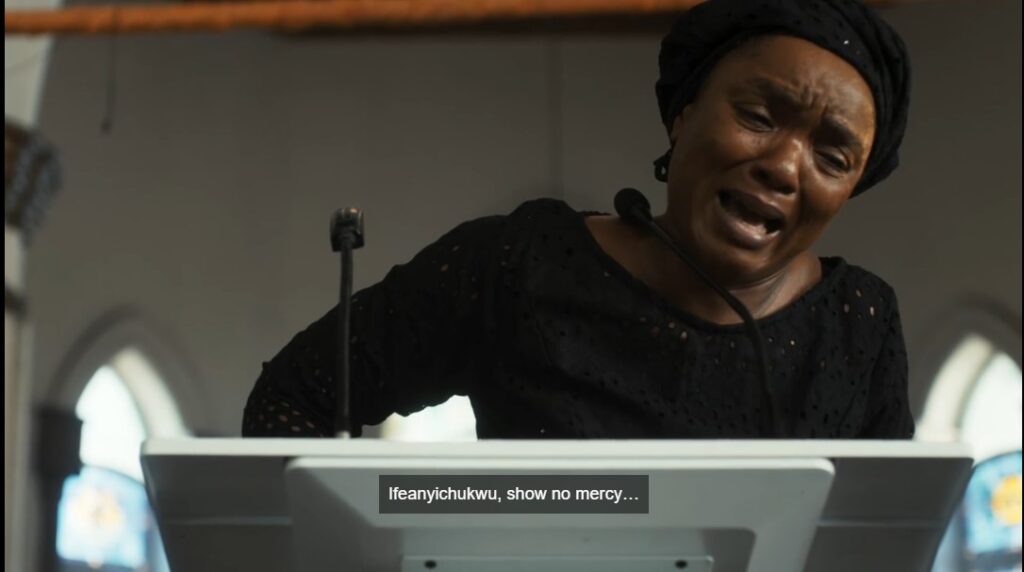
Did you cry, pause the film, rewind the scene, or carry the feeling with you afterwards? What did your grief or reaction look like?
I don’t think I cried, but I was deeply emotional. I could feel it in my chest, like a weight. It stayed with me even after the movie ended.
Have you ever been able to rewatch that moment, or is it one you still skip or avoid?
No, I haven’t gone back to rewatch it. To be fair, I don’t usually revisit Nollywood movies—I can do that with cartoons, but not films. Still, I don’t think I could stomach watching that particular scene again.