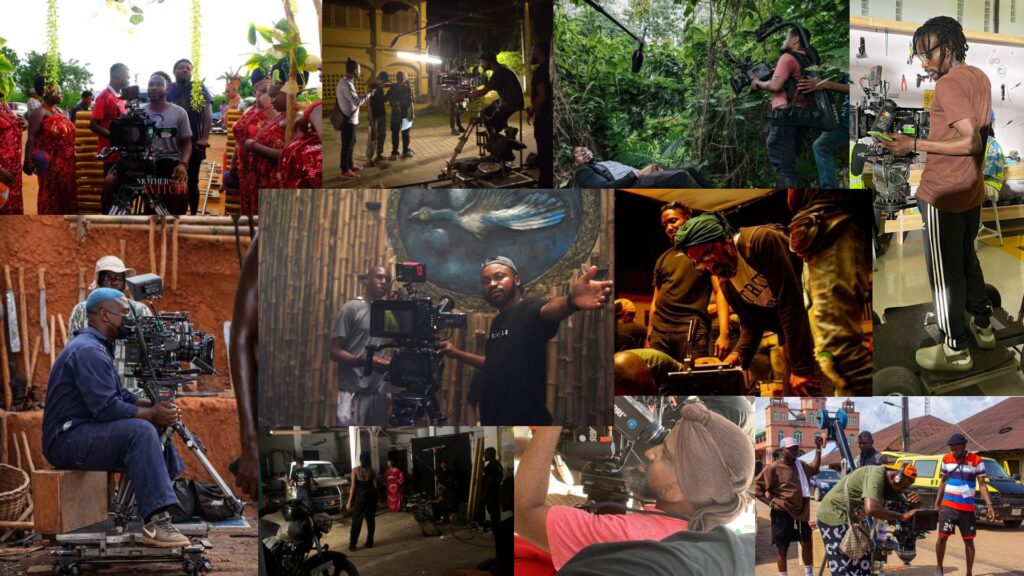
In 2025, images across Nollywood were more deliberate: they were less about spectacle for its own sake and more about control, texture, and intention. Across theatrical releases and streaming titles, cinematographers leaned into tools that could better handle skin tones, shifting light conditions, expansive landscapes, and increasingly ambitious production demands.
ARRI dominated evidently, particularly with the Alexa 35 and large-format systems, but RED and Sony cameras continued to play key roles, especially on projects shaped by budget flexibility, mobility, or heavy post-production workflows. More importantly, the year revealed a shared philosophy among cinematographers: cameras matter, but only insofar as they serve story, scale, and collaboration with directors.
This is not a ranking. Instead, it’s a snapshot of how eight Nollywood cinematographers approached their work in 2025, why they chose certain cameras and lenses, and how those tools shaped the final images audiences saw on screen.
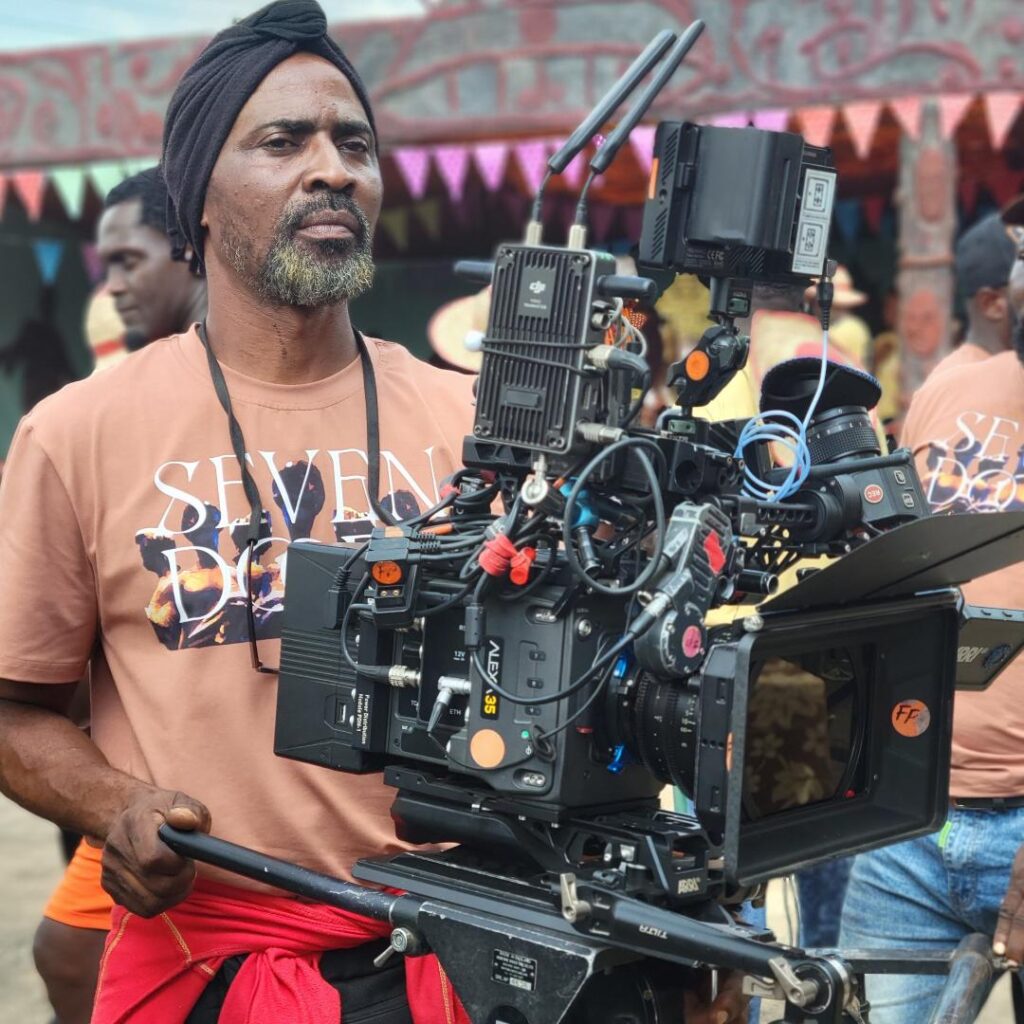
Idowu Adedapo (Mister Views)
‘Ori: The Rebirth‘; Red Gemini (camera), Sigma lenses
‘Iyalode‘; Arri Alexa 35 (camera), Canon Sumire lenses
‘Agesinkole 2‘; Red V-Raptor (camera), Canon Sumire lenses
Idowu Adedapo’s 2025 output spanned genres and scales, from epic sequels to studio comedies, requiring a flexible approach to camera systems. His work alternated primarily between ARRI’s Alexa 35 and RED’s Gemini and V-Raptor, often paired with Canon Sumire primes for their consistency with skin tones.
For Adedapo, gear decisions begin with interpretation rather than brand loyalty. “Each film has a different interpretation, which also depends on the budget,” he explains. “Mostly, I choose based on the storyline and the look and feel I want to achieve.”
He points to codec, colour science, and dynamic range as the real differentiators between modern cinema cameras. “The difference is really colour science and codec with dynamic range. With the right approach, the same gear can do both for me.”
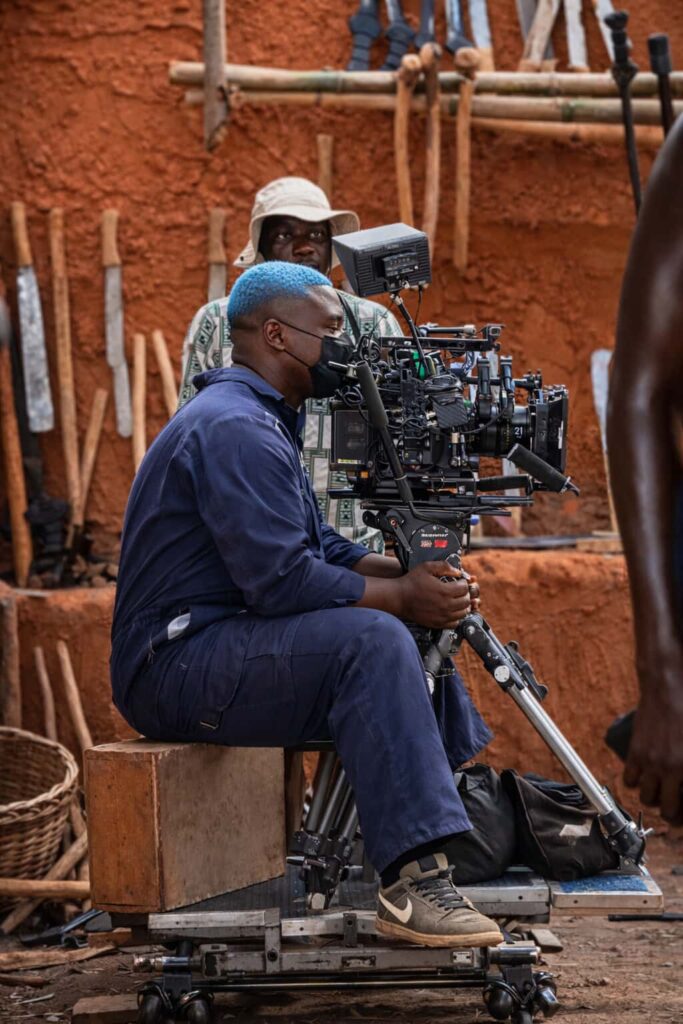
Muyiwa Oyedele (Mr Movies DP)
‘Reel Love‘; ARRI Alexa 35 with DZOFilm Anamorphic lenses
For Reel Love, Muyiwa Oyedele opted for the ARRI Alexa 35, pairing it with DZOFilm anamorphic lenses to achieve a clean, controlled image with cinematic depth. The choice, he says, was straightforward.
“I just needed it to come clean,” Oyedele notes, pointing to the camera’s dynamic range and ARRI’s signature colour response. Features like Log-C4, natural highlight roll-off, and sensor reliability made the Alexa 35 an easy fit for the film’s visual demands, especially within a traditional cinema workflow.
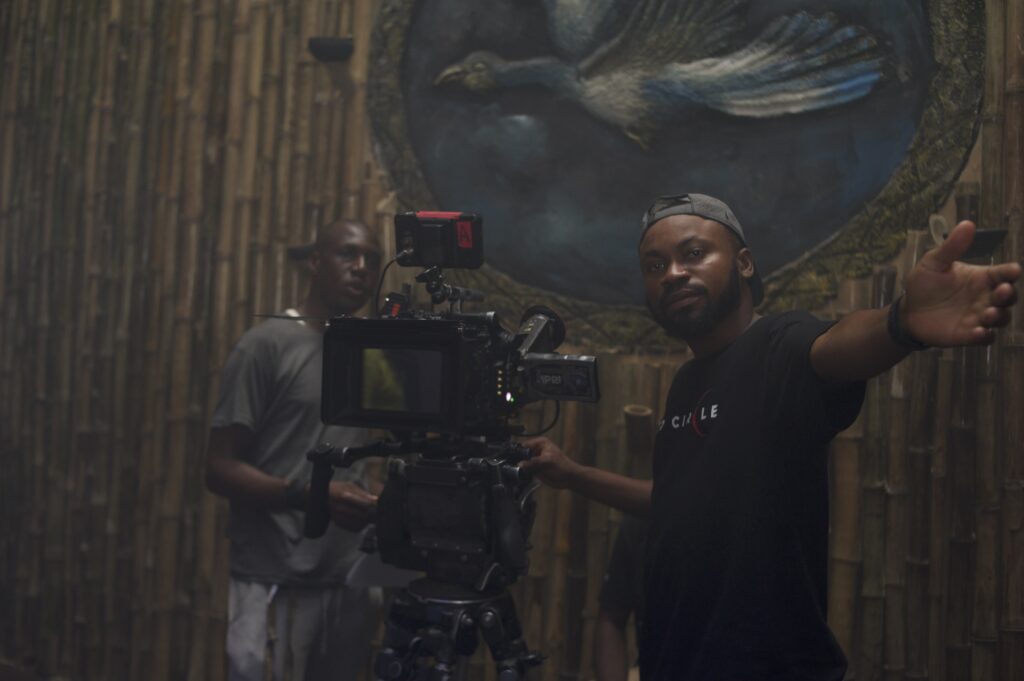
Barnabas Emordi
‘Lisabi: A Legend Is Born‘; ARRI Mini LF, Canon Sumire primes
‘Colours of Fire‘; ARRI Mini LF, ARRI Signature Prime lenses
Barnabas Emordi’s preference for large-format sensors continued in 2025, with the ARRI Mini LF anchoring both Lisabi: A Legend is Born and Colours of Fire. For Emordi, the camera’s sensor performance, particularly with darker skin tones, remains unmatched.
“The ARRI Mini LF captures and renders dark skin tones accurately,” he says. “Their sensor technology and colour science are years ahead.”
Lens choice was equally intentional. Canon Sumire primes served as his go-to for their warmth and character, while ARRI Signature Primes were selected for Colours of Fire to match the film’s expansive visual ambition. “They’re crisp and timeless, with beautiful bokeh and no distortion even in wide shots.”
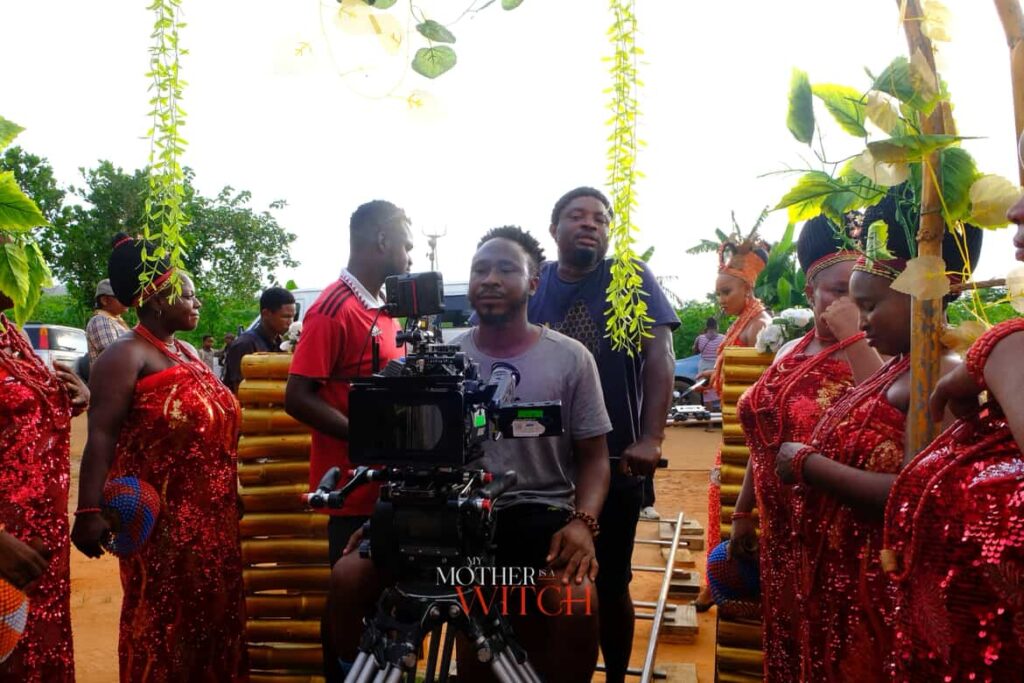
Ralph Kanye
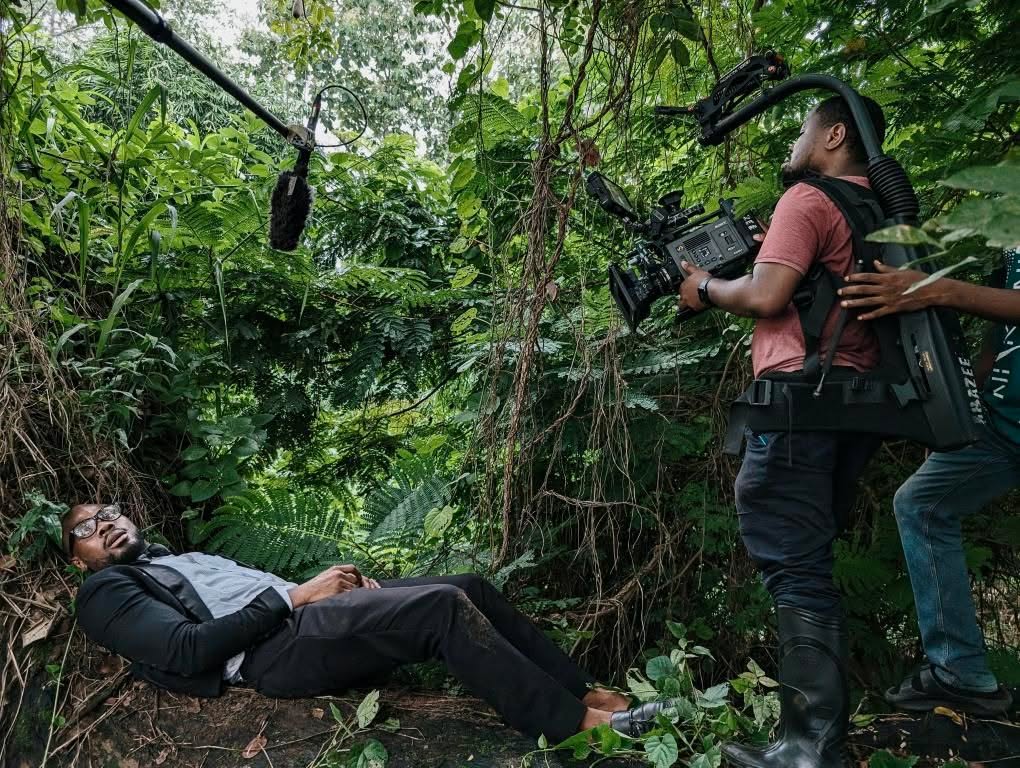
‘My Mother Is a Witch‘; ARRI Alexa 35 with Cooke lenses
On My Mother Is a Witch, Ralph Kanye worked with the ARRI Alexa 35, largely a production-driven decision, but one he believes elevated the film’s visual possibilities. The camera’s dynamic range, which he estimates at around 17 stops, allowed for greater freedom in lighting and exposure.
“It helped us retain shadow and highlight detail without losing information,” Kanye says. He also highlights the Alexa 35’s reliability, noting that the camera held up consistently during shoots in Benin’s heat.
Still, Kanye is quick to contextualise the tool’s importance. “The camera is just a tool. ARRI won’t save a bad DP or a bad story.”
Emmanuel Igbekele
‘The Herd‘; Sony Venice 2 with Athena Nisi Prime lenses
‘Gingerrr‘; Sony Burano with ARRI Master Primes
Emmanuel Igbekele turned to the Sony Venice 2 for The Herd, particularly for its dual ISO functionality. Shooting night scenes at ISO 3200 allowed him to achieve clean images with minimal lighting while maintaining strong colour reproduction and detail.
“The colour science captured rich skin tones and vibrant exteriors effortlessly,” he says, crediting the camera’s 16 stops of dynamic range and internal ND filters for its flexibility.
For Gingerrr, Igbekele switched to the more compact Sony Burano to accommodate extensive Steadicam work. Paired with ARRI Master Primes, the Burano delivered comparable dynamic range while offering greater mobility on set.
Okwong Fadamana
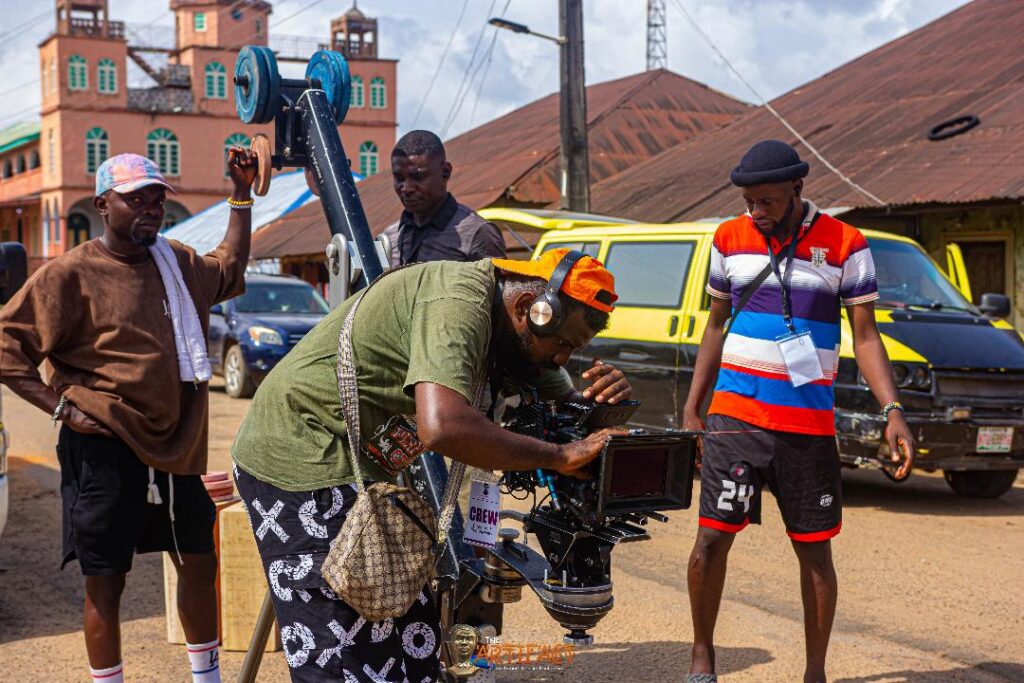
‘The Fire and the Moth‘; RED Monstro, Canon Sumire lenses
‘The Artifact’; RED Gemini, Canon CN lenses
‘The Boy Who Gave‘; RED Raptor with Cooke S7i lenses
A long-time RED user, Okwong Fadamana’s 2025 projects leaned heavily on the brand’s flexibility and contrast-forward image profile. Budget considerations often dictated camera choice, but story and post-production needs played an equally important role.
“RED has a lot of high contrast, and my films usually demand that,” he explains. For VFX-heavy workflows, he gravitates toward the RED Raptor’s 8K resolution, while outdoor-heavy projects benefit from RED’s colour response—particularly its handling of greens.
“I know how to manipulate RED very well,” Fadamana says. “Depending on the story, if I’m mostly outside, I’d rather use RED.”
Adeniyi Joseph Omobulejo (TAJ)
‘Landline‘; ‘Makemation‘
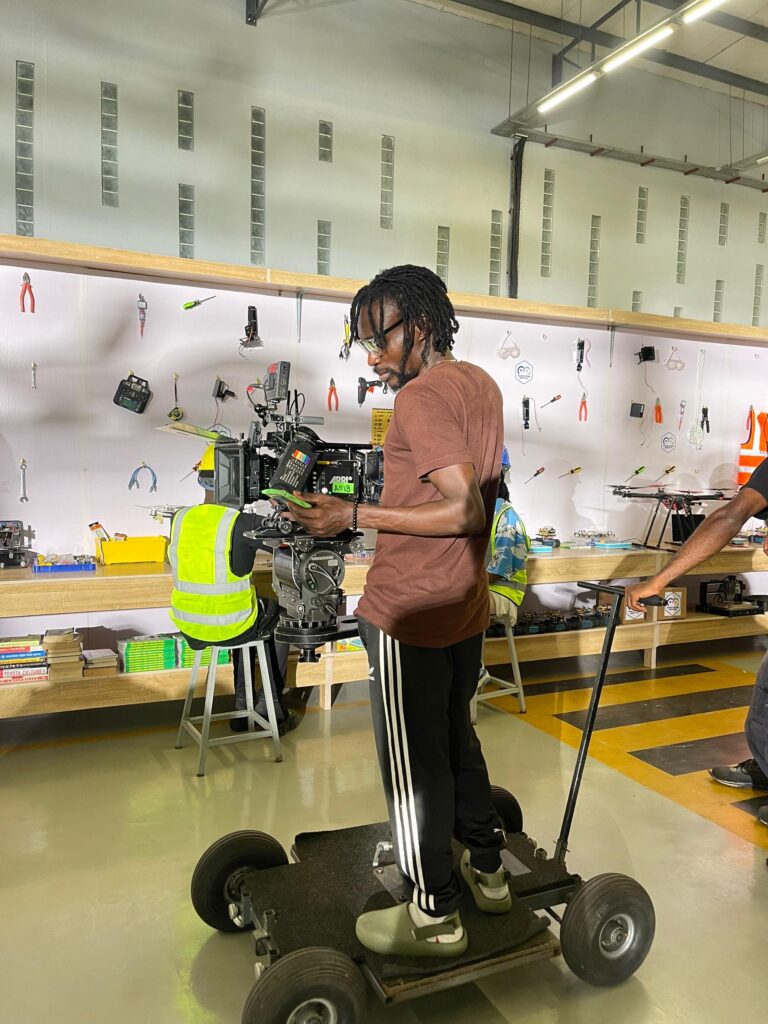
ARRI Alexa Mini LF with ARRI Ultra Prime lenses
For TAJ, the ARRI Alexa Mini LF remains the benchmark. Both Landline and Makemation were shot on the large-format camera, paired with ARRI Ultra Primes to deliver a clean, flexible image suitable for extensive post-production work.
“ARRI almost sees close to what your eyes see,” he says. While he acknowledges the camera’s technical strengths (dynamic range, colour fidelity, and global industry adoption), he emphasises that the operator remains the deciding factor. “The camera is only a tool.”
Kenechukwu ‘KC’ Obiajulu
‘Something About the Briggs‘; ‘3 Cold Dishes‘; ‘Stitches‘
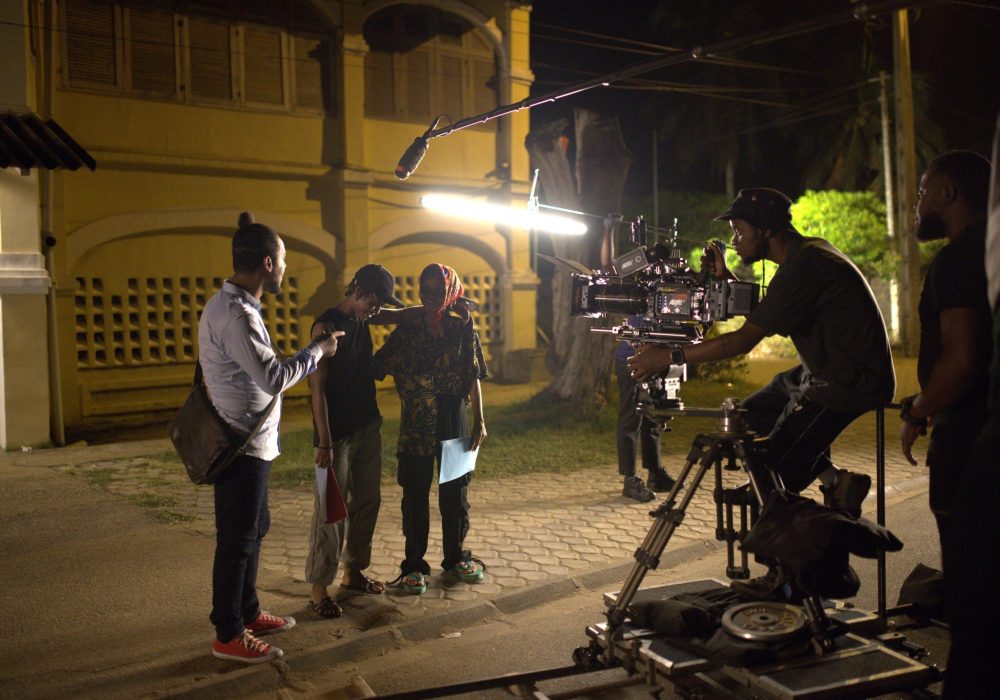
ARRI Alexa LF with Cooke Anamorphic/i Full Frame lenses
KC Obiajulu’s 2025 work was guided by one recurring phrase: big screen. For films designed with theatrical exhibition in mind, he consistently pushed for large-format cameras paired with full-frame anamorphic lenses.
“When a director tells me they want to make a film for the big screen, that changes everything,” he explains. Availability, pricing, and collaboration with directors all factor into his decisions, but visual scale often tips the balance.
Landscape-heavy films like 3 Cold Dishes benefited from the width and depth of the Alexa LF and Cooke Anamorphics, while Something About the Briggs continued that visual language after Obiajulu shared references from earlier projects. “It’s never a solo decision,” he says. “It’s about finding the right combination that serves the story.”
Taken together, these choices reflect a year where cinematography was less about chasing trends and more about intentional image-making: balancing story, scale, and the realities of production with tools that could deliver on screen.