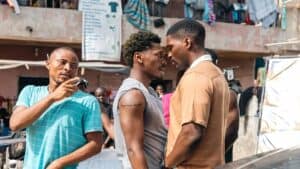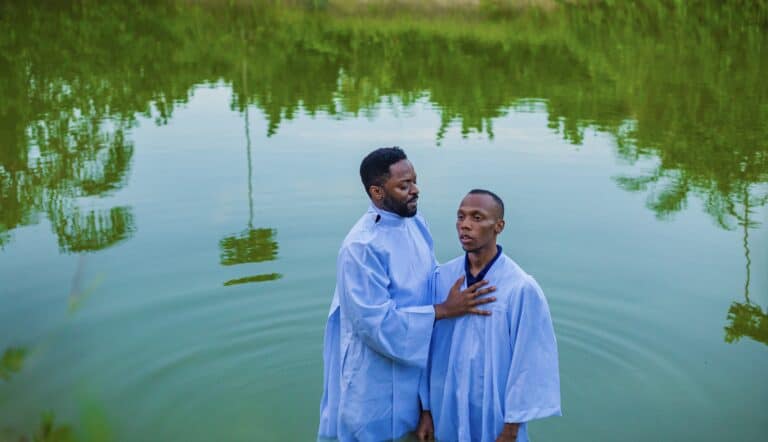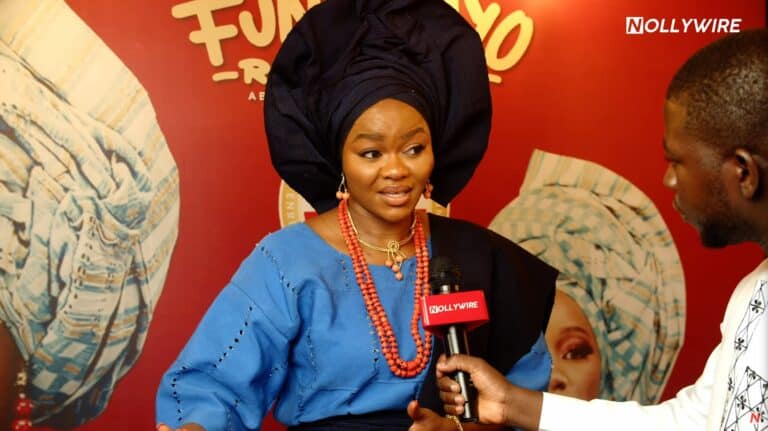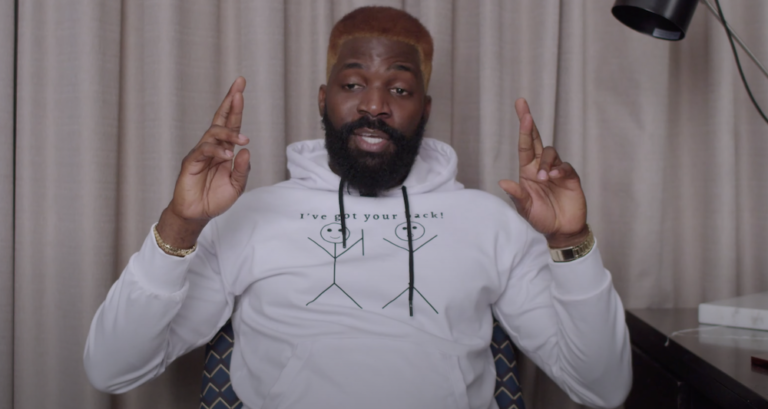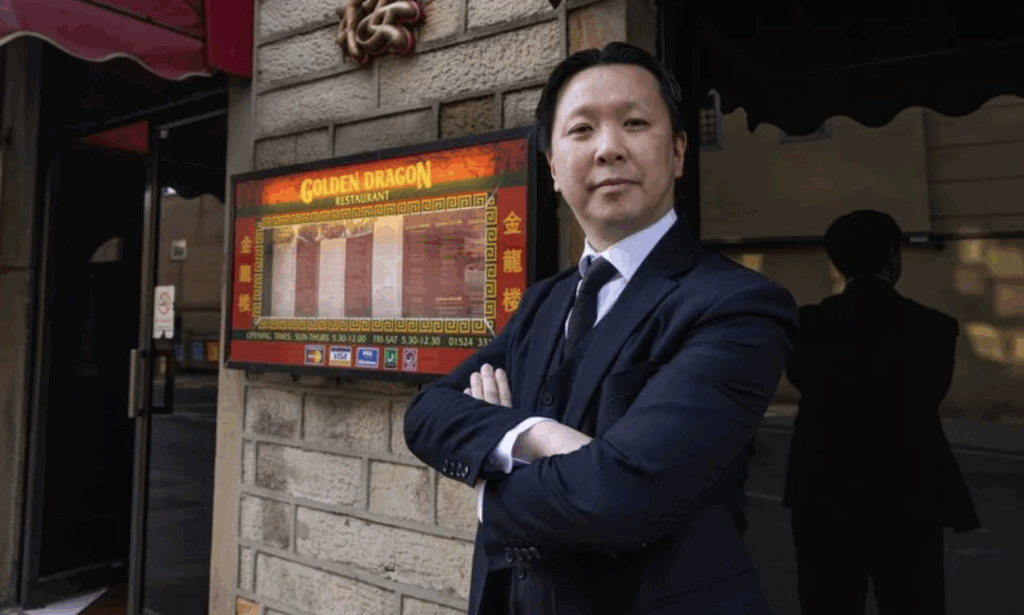
British-Chinese filmmaker Chee Keong Cheung—affectionately called Director Chi on set—arrived in Lagos to make ‘Son of the Soil’ with an outsider’s curiosity and a storyteller’s instinct. The action thriller, written by Cheung and lead actor Razaaq Adoti, follows a haunted ex-commando pulled back into violence when his sister’s death entangles him in a murderous drug network. The film stars an ensemble of Nollywood powerhouses, including Patience Ozokwor, Ireti Doyle, Damilola Ogunsi, Taye Arimoro, Toyin Oshinaike, Sunshine Rosman, Philip Asaya, Sharon Rotimi, and Adoti himself.
Though the premise pulses with danger, bullets, and back-alley confrontations, Cheung frames the project first as a meditation on people. “People always really fascinated me,” he says. “I like to understand people.” It’s a quietly reflective approach to a film designed to move quickly and hit hard, but for him, spectacle is empty without emotional architecture.
“If it’s just action, action, you become desensitised,” he explains. “I wanted every character to have a backstory. Even the bad guys; nobody thinks they’re the villain in their own mind.” This philosophy shaped his directing style and the collaborative environment that cast members have repeatedly praised. Cheung credits that to humility and a respect for the local specificity of the story.
He watched Nollywood thrillers like ‘Gangs of Lagos’ and ‘Brotherhood’ but ultimately relied on observing Lagos itself: its rhythm, its contradictions, and its people. “It’s one thing to write a script—Razaaq did a great job—but that’s only one layer,” he says. “The actors bring the nuances. We workshopped scenes and encouraged improvisation. Listening was really key.”
Lagos is not just a backdrop in ‘Son of the Soil’; Cheung treats it like a living force—beautiful, chaotic, and unpredictable. Filming in the city meant embracing intensity and surprise. But what struck him most wasn’t the pace; it was the people.
“There was an intensity,” he recalls, “but the sense of community stood out. We filmed in places where people hadn’t shot before due to challenges, but the community came together. We worked with them and put them in the film. It really brought people together.”
For a director used to controlled environments, Lagos demanded adaptation. “Nigerian time can be a bit of a challenge,” he admits, half-amused, half-admiring. But despite the pressures of a limited budget, he refused to shrink the film’s scope. “I didn’t want just one location in a house. I wanted us out on the streets. I wanted to capture the city.”
That ambition made logistics harder, but it also made the film burst to life. Cheung credits his on-ground producer, Wingonia Ikpi for guiding him through the realities of local production. “It was a humbling experience. I didn’t want to come in and say, ‘This is how you make a film.’ I wanted to understand first and then add my spin.”
‘Son of the Soil’ is framed as a redemption story, but beneath the action lie deeper themes—power, struggle, money, corruption, and community survival. These emerged naturally from what Cheung observed and what the actors brought into their roles. “You see tough, challenging images in Lagos,” he states, “but also so much beauty. People are just getting on with their lives. It’s these different worlds colliding.”
The performances of the actors have already begun drawing recognition. Several actors earned Best in Nollywood nominations—a win Cheung views as theirs, not his. “It’s a testament to their ability and talent,” he refuses to take glory for their performances.
More than a film, ‘Son of the Soil’ serves as Cheung’s argument that Nigeria is a fertile ground for international cinema. The talent pool is deep, the energy is unmatched, and the stories are rich, yet global perceptions, he notes, can be skewed.
“There can be points of view that aren’t overly positive,” he says. “Sometimes they come from a place that isn’t fully informed. I hope the film shows the power of collaboration and that Nigeria is open for business.” He hopes to return for more projects, eager to build on what he started. “If people like the film, I’d love to be back. There are opportunities here.”
Cheung may have begun this journey struggling to pronounce Omonile (son of the soil) but he leaves Lagos not as a distant observer but as a filmmaker deeply moved by its spirit. ‘Son of the Soil’ is an action thriller on the surface, yes—but beneath it lies a beating human heart, shaped by a director who chose to listen first and shoot second.