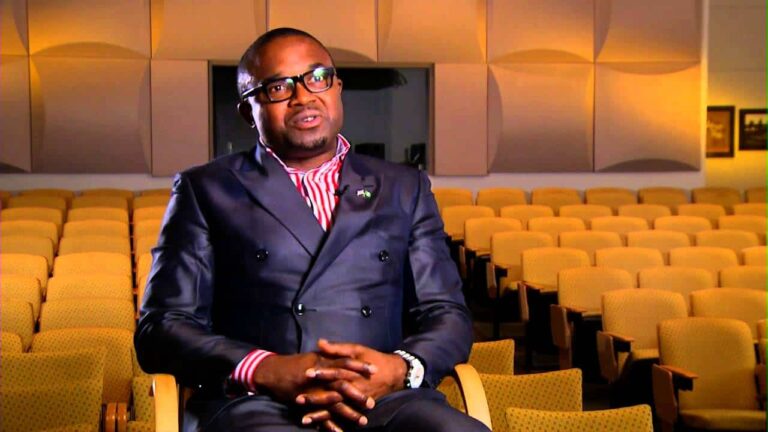
Razaaq Adoti carries the spirit of Omonile—“son of the soil”—with an ease that feels inherited, lived-in, almost ancestral. Long before he stepped into the boots of Zion, the conflicted ex-commando at the heart of Son of the Soil, Adoti was already shaped by the idea of home and belonging. His father, a proud Nigerian raising his family in London, made sure of it.
“My dad would always tell me, ‘Just because you’re born there amongst them doesn’t mean you’re one of them. Always embrace your roots’” Adoti recalls. He laughs, remembering an adage that resounded in his home: “If a lion cub is raised among lambs, does it become a sheep? That stuck with me.”
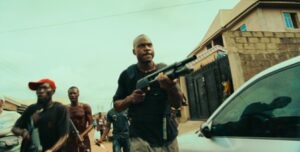
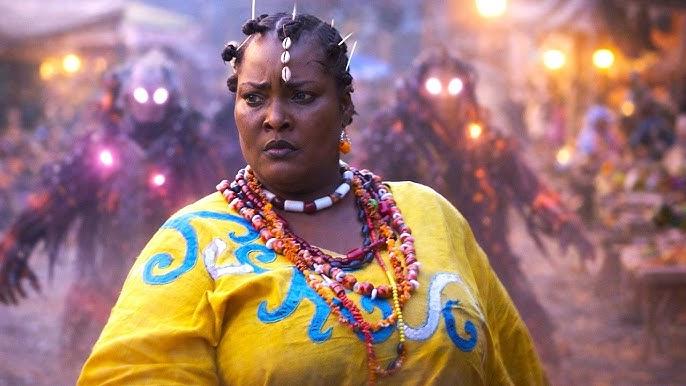
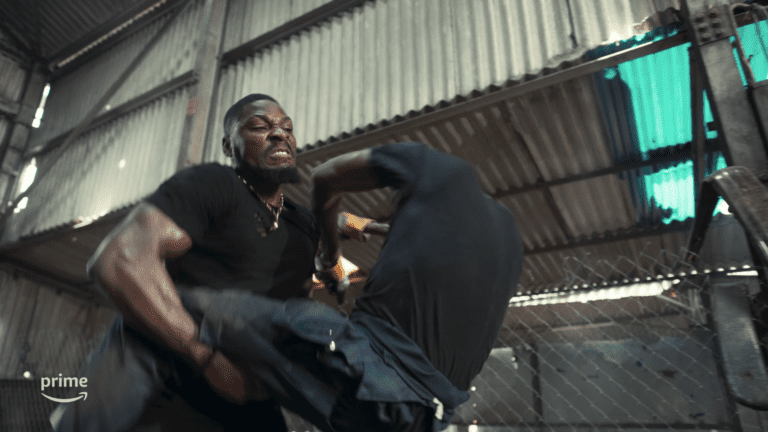
That unshakeable awareness of his Nigerian identity is not just a personal philosophy; it is the emotional engine powering ‘Son of the Soil’, the action thriller he co-wrote with director Chee Keong Cheung. The film follows Zion, a man who returns home after nearly twenty years abroad, intending only to attend his sister’s funeral—until he discovers his hometown overrun by a violent drug network. What begins as grief becomes duty, then a quest for redemption. It stars Patience Ozokwor, Ireti Doyle, Damilola Ogunsi, Taye Arimoro, Toyin Oshinaike, Sunshine Rosman, Philip Asaya, Sharon Rotimi, and Adoti himself.
Adoti’s connection to Zion is unmistakable. Though their experiences differ, both men understand the disorientation of distance. “I can’t divorce myself from my journey,” he says. “Zion and I are different people, but the feeling of disconnect – being away for so long, then coming back and finding things changed – that part, I knew very well.”
The film itself was born from conversations between Adoti and Cheung while working on a previous project, ‘The Experiment’. Cheung wanted to shoot outside the UK and US; Adoti wanted to tell a story that felt fresh and culturally true. Nigeria, with its scale, chaos, and soul, became the ideal canvas.
“Once we decided on an action film set in Nigeria, things moved fast,” he says. “Usually you wait years for a project to get traction. But this one, everything aligned. We just went ahead and did it.”
Adoti visits Nigeria often, but the pandemic created a long, unplanned break from his routine trips. Stepping back onto Lagos streets for production wasn’t just work; it was a reconnection. The city did more than serve as the film’s backdrop; it shaped the performance, sometimes more than the script itself. “The street brought the story to life,” Adoti says. “It’s one thing writing it on the page, but seeing those words come alive out there? It hits different.”
Filming often took place in neighbourhoods outsiders considered “unsafe”. People warned him. He ignored them. “If I was born in Mushin or Bariga, I’d be hustling too. How can I judge?” he asks plainly. “When your back is against the wall and opportunities are few, you do what you must to survive. That doesn’t make you a bad person.”
Instead of treating communities like set pieces, the production integrated them. “We didn’t just shoot and leave. We involved them. Some of the guys in the film? They’re really from there. They were just doing them, authentic.” The relationships didn’t end when filming wrapped. “I’m getting texts from these guys—’Bros, we miss you!'” he says with obvious affection. “We want to go back and do a screening in the community. They deserve to see it.”
Zion’s character carries a duality—rooted in Nigeria, reshaped abroad. Adoti leaned into that layered identity. “He’s half-American now, half-Nigerian,” he says. “He’s got that energy, that tension, that confusion. He’s changed, but he still belongs.”
Asked to slip into character during the interview, Adoti laughs and tries but stops himself mid-sentence. Without the environment, the costume, or the emotional grounding of Lagos, it doesn’t feel right. “To get into Zion, I needed the streets,” he states. “Lagos gave him life.”
The making of ‘Son of the Soil’—from inception to execution—reflects a rare kind of creative decisiveness. No waiting for perfect timing. No long pauses for financiers. Just belief. “You can have a great idea and still wait forever,” Adoti says. “But with this one? We didn’t wait. We made it happen.” There is pride in his voice, but it is not ego but pride in the work, the community, the collaboration, and the country that shaped him long before he ever wrote the script. “I’ve always been proud to be a son of the soil,” he declares. “Always.”