African cinema is standing at the threshold of a new era, one marked by unity, collaboration, and shared ambition. Leading this charge is iKON Africa, an initiative that has steadily positioned itself as a catalyst for collaboration across the continent.
On September 27, 2025, iKON Africa hosted its first-ever Uganda–Nigerian Soirée at EbonyLife Cinemas in Lagos, Nigeria. The event gathered filmmakers, actors, producers, and industry stakeholders from both countries in an intimate celebration of African storytelling. More than a social evening, the soirée symbolised the beginning of deeper cross-cultural exchange between Nollywood and Uganda.
This was not just a gathering; it was a declaration of intent. iKON Africa is expanding beyond its Ugandan roots and is now setting out to unite Africa’s film industries into a formidable collective that can hold its own against Hollywood, Bollywood, and other global cinema powerhouses.
In an interview at the event, Chris Odeh spoke about the challenges facing African cinema. “We don’t have the numbers, funding, population, and wide acceptance that Hollywood has, but our power lies in collaborating as Africans.”
These words capture the essence of iKON Africa’s vision. By itself, no African country has the financial muscle, infrastructure, or global networks to rival established film industries. But together, Africa’s rich diversity of languages, cultures, and histories presents an unparalleled treasure of stories waiting to be told.
For years, iKON Africa had primarily focused on Uganda, championing young filmmakers through initiatives such as the iKON Awards and its fellowship programme. Seeing the limits of working in isolation, the organisation decided to broaden its scope. The Nigerian soirée is the first of many planned cross-border events designed to bring filmmakers from different African nations into dialogue and partnership. And what better place to start this journey than Nigeria, the continent’s most populous country and home to Nollywood, the second-largest film industry in the world in terms of output?
The soirée provided a platform for Ugandan filmmakers to engage with some of Nollywood’s leading names. The discussions ranged from conversations about co-productions to cultural exchanges. Humphrey Nabimanya, founder of the iKON Awards, emphasised the significance of this partnership. “Many actors and actresses in Nollywood are highly celebrated in Uganda. When we began to focus on film, Nollywood was one of the captivating industries we admired. This collaboration is to strengthen the ties we already share and to celebrate our traditional values together. Nollywood has shown us how to present our culture on screen, and Uganda hopes to learn and contribute as well.”
This sentiment was echoed by Nigerian producer Chris Odeh, who described the partnership as “a great collaboration between the Giant of Africa and the Pearl of Africa.” He noted that while Nigeria has made major improvements to filmmaking, the industry still has room for growth. “We are not there yet, but we are doing senior brother moves,” he said, suggesting that Nollywood’s experience can serve as a model for other African industries while also benefiting from their unique contributions.
The idea of collaboration is not entirely new. Recently, Nigerian filmmakers have conducted masterclasses and workshops across the continent. For example, Nollywood star Ramsey Nouah travelled to Uganda for a filmmaking masterclass, sharing insights on acting, directing and the business of film.
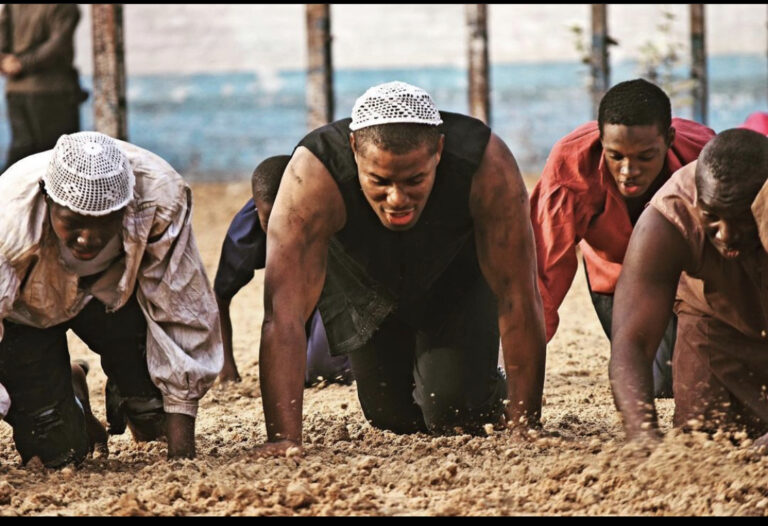
Ramsey Nouah himself is already integrating collaboration into his projects. His upcoming drama, ‘Dambe’, based on Hausa mythology, will feature a Ugandan actor who has since started learning the Hausa language while practising his lines. This casting choice symbolises the very essence of Pan-African filmmaking: cross-cultural exchange, mutual learning, and a shared platform to tell uniquely African stories.
“I don’t think any country in Africa can compete with America, South Korea, China, or Europe individually,” Nouah remarked. “The only way we can compete is if we compete as Africans. By numbers, by technology, by finance—they beat us. But the beauty of Africa is in everybody presenting what they are good at and making it a conglomerate. Uganda is bringing their deep stories, Nigeria our experience, South Africa their technology, Kenya their discipline and Ghana their uniqueness. Together, we can make Africa a global competitor.”
The collaboration also resonated with actors like Michael Wawuyo, a recipient of the iKON Lifetime Achievement Award. Wawuyo praised Nollywood’s evolution and stressed that Uganda hopes to carve out a similar path by learning from Nigeria’s successes. He also revealed that he will star in Ramsey Nouah’s ‘Dambe’, though he refrained from disclosing details. For him, Africa’s large population is a key asset; if properly harnessed, it could help African films achieve wider acceptance.
Similarly, Nigerian actor Kalu Ikeagwu reflected on his earlier collaborations with Ugandan filmmakers in 2018, and he is optimistic this partnership is off to a great start. He highlighted that the calibre of people involved shows a great trajectory for the partnership.
One of the significant announcements of the evening came from Chris Odeh, who revealed that his NGO, Quirosity, in partnership with Ramsey Films, will provide a $10 million prize for young Ugandan filmmakers. The initiative aims to support the next generation of storytellers, equipping them with the resources to produce films that can reach international audiences.
The Uganda–Nigeria Soirée is only the beginning. iKON Africa plans to host similar events with other African countries, gradually weaving a network of filmmakers united by a shared vision. If successful, this Pan-African approach could help Africa’s film industry achieve greater bargaining power in international markets, enhance distribution channels, and tell stories that resonate globally while staying rooted in African identity.
The collaboration comes at a time when global audiences are increasingly hungry for fresh voices and diverse narratives. African cinema, with its blend of history, mythology, modern struggles, and triumphs, has the potential to fill that gap. By standing together, African filmmakers can amplify their voices, strengthen their industries, and ultimately make Africa a true unicorn in the global film ecosystem.
In Humphrey’s words, “And this is the start, the beginning. And that’s how important it is, you know, because our stories shape the narrative. You know, they shape where we are going. They shape our policies and also they inform us of the daily challenges and solutions that we get every day.”