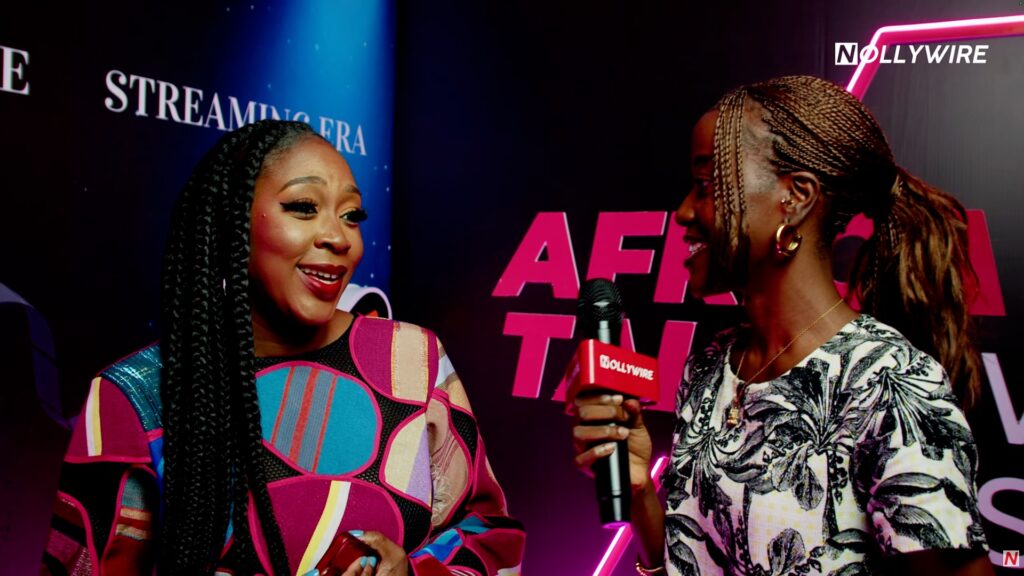
As debates around Nollywood’s distribution system resurface, FilmOne Entertainment’s Chief Content Officer, Ladun Awobokun, says concerns about a breakdown between producers, distributors, and exhibitors are overstated.
Speaking on Arise 360, Awobokun acknowledged that scheduling conflicts and late decisions do occur but insisted they are not systemic. “For the most part, the big films are settled quite early,” she said, pointing to seasonal coordination across cinemas, distributors, and studios.
Following a recent open letter by Funmi Onuma, the managing director at Silverbird Cinemas, her comments come months after the Cinema Exhibitors Association of Nigeria (CEAN) publicly rejected claims of bias in film scheduling, maintaining that screen allocation is driven by demand and ticket performance rather than favouritism.
Commercial Logic Over Sentiment
Awobokun repeatedly defended cinema decisions as purely commercial. From Filmhouse Cinemas’ perspective, she said, programming is based on what will “guarantee bums on seats”, not industry politics or relationships.
That position aligns with FilmOne’s broader strategy as both distributor and exhibitor, where performance data increasingly dictates outcomes. As previously reported by Nollywire, distribution—how films are positioned, released, and marketed—has become as critical as production itself.
Awobokun noted that while most decisions land correctly, surprises still happen. She cited the breakout performance of Demon Slayer in cinemas, an outlier that challenged internal assumptions about audience appetite.
Why Some Films Miss Cinema Prime Slots and The ‘Michael’ question
On the recurring complaint from producers about limited screen time or unfavourable show slots, Awobokun was direct: stronger-performing titles take priority.
“If you’re not getting specific showtimes, there’s probably a stronger film,” she said, adding that scheduling also varies by location, with audience behaviour in Ibadan differing significantly from Lekki.
She also explained that not every film is designed for theatrical success. Some titles receive limited cinema runs to qualify for awards or serve as marketing before moving to streaming platforms.
Awobokun also addressed why the Nile Entertainment-distributed Michael Jackson biopic Michael is not screening at Filmhouse Cinemas, despite its strong box office run elsewhere.
According to her, the decision came down to distribution terms that were “a few notches above what is standard” and ultimately not viable for the business.
Still, she framed the film’s success as positive for the wider ecosystem. “No one film makes an industry,” she said, adding that strong theatrical performances regardless of platform help grow cinema culture overall.
She drew a comparison to FilmOne’s release of ‘Fumilayo Ransome-Kuti’, which became the first Nollywood biopic to cross ₦100 million, noting that the success of Michael signals growing audience acceptance for the genre.
KAVA and the Post-Showmax Gap
Beyond cinemas, Awobokun positioned KAVA as a key part of FilmOne’s long-term distribution strategy.
Launched in 2025 by Filmhouse Group and Inkblot, the platform is designed as a global home for African content. Its emergence coincides with the ongoing restructuring of streaming in the region, including the planned phase-out of Showmax.
Awobokun said KAVA has already attracted both local and diaspora audiences, with several major titles premiering on the platform since launch. She identified product quality, marketing, and content as its three core pillars.
“We’re not trying to play in everybody’s content,” she said. “We’re saying African voices need to be heard.”
Ladun Awobokun’s remarks reinforce a position she has previously articulated since stepping into her expanded role at FilmOne Entertainment: balancing creative ambition with audience demand remains the central challenge.
While criticisms around access, visibility, and fairness persist, her argument remains that Nollywood’s distribution system is not broken, but it is still evolving around one core principle: performance.
And for now, performance is what decides everything.