
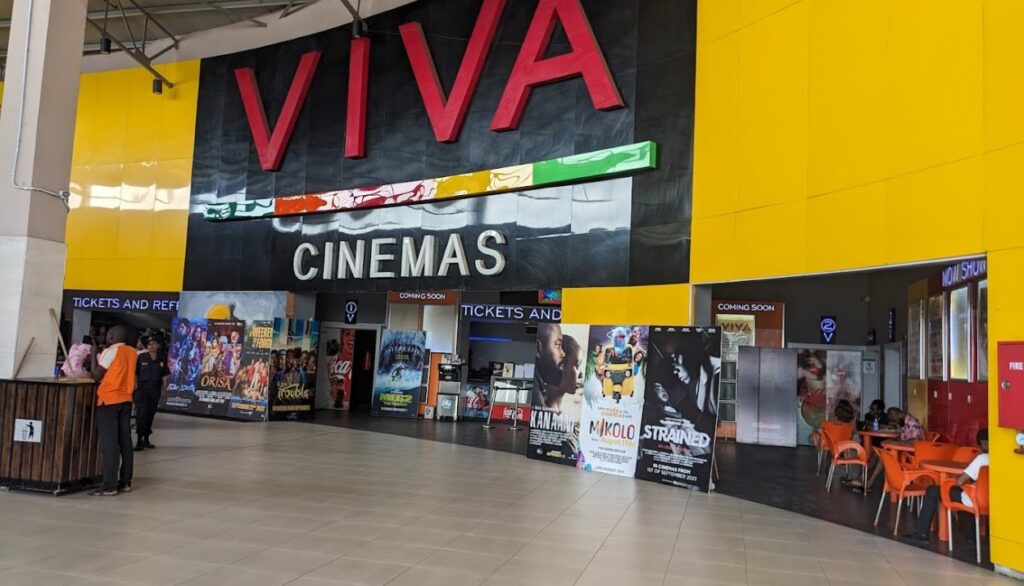
The Viva Cinemas management deal will not make Nile Cinemas a major exhibition player overnight. It does something more valuable: it secures control of key screens. As local films overtake Hollywood at the box office, that control strengthens Nile Entertainment’s leverage in theatrical distribution.
Nile Group, led by Moses Babatope, entered the cinema business just over a year ago, taking over the operations of THC Cinemas Ifako-Ijaiye and Royal Roots Cinemas Ikota. In 2024, its distribution arm, Nile Media Entertainment, ranked seventh among theatrical distributors, generating ₦127.1 million in box office receipts, well behind FilmOne Entertainment’s ₦8.69 billion market-leading position, according to FilmOne’s 2024 Nigerian Box Office Yearbook.
The Viva deal does not close that gap. What it does is change Nile’s position in the value chain by guaranteeing access to four additional cinema locations: screens it can influence, programme, and rely on when negotiating release terms.
That matters in a market where distribution outcomes are increasingly shaped by screen certainty rather than headline scale. FilmOne’s Yearbook shows Hollywood titles narrowly leading Nollywood in 2024, 52 percent to 46 percent of box office revenue, with the gap expected to close. Babatope says the crossover has since occurred, with local films now leading in both admissions and revenue.
As that shift accelerates, distributors embedded in regional and mid-tier urban markets, where local titles traditionally sustain longer runs, gain a structural advantage.
For Nile, the partnership converts Viva’s exhibition footprint into distribution leverage: greater certainty over release windows, improved economics for mid-budget local films, and reduced dependence on competitor-controlled circuits.
Guaranteed Screens For Nile Entertainment in High-Yield Markets
On paper, Viva is a modest player. Its four cinema locations generated ₦444.6 million in gross box office in 2024, accounting for four percent of total revenue and six percent of admissions, well behind Filmhouse, Silverbird and Genesis, according to the Yearbook.
The value of the deal, however, lies less in aggregate share than in where those revenues are earned and how much control Nile now has over key release corridors.
Two Viva locations operate in Ilorin and Enugu, low-competition markets where local titles traditionally outperform Hollywood films.
Ilorin, which has only one cinema location, generated ₦125.4 million in 2024 from Viva’s four-screen site, accounting for 1.2 percent of total box office earnings. That single location delivered 42,584 admissions, outperforming several multi-site chains on efficiency.
In Enugu, Viva dominated a small but stable market, outperforming the city’s only competing operator, Greenhauz Cinemas.
For distributors, these markets offer predictable admissions without the intense competition for screen time typical of Lagos and Abuja.
Strategic Substitutes in Lagos and Ibadan
In Lagos, Viva’s Ikeja location inside Jara Mall sits just outside the gravitational pull of Silverbird Cinemas at Ikeja City Mall, the second-highest-grossing cinema location in Anglophone West Africa in 2024, with ₦829.5 million in revenue and more than 206,000 admissions.
While Viva’s Ikeja site posted a more modest 41,620 admissions, its positioning gives Nile a functional alternative screen cluster in one of Lagos’ most commercially active cinema districts.
In Ibadan, Viva’s Palms Mall location ranked 17th among the highest-grossing cinemas by admissions in 2024, outperforming several locations nationwide. With Filmhouse operating two sites in the city, Viva has emerged as the preferred secondary destination after Filmhouse’s Samonda site.
Together, these locations reduce Nile’s dependence on competitor-controlled circuits and strengthen its negotiating position when setting release patterns.
Beyond operators and distributors, the audience is a critical stakeholder in the deal.
Babatope says moviegoers should expect improved service standards, more responsive feedback systems, broader programming, and increased access to film-related events—from premieres to festivals. Nile is also considering modest upgrades across Viva’s sites to remain competitive in a value-conscious market.
It is a significant promise in a sector frequently criticised for high ticket prices paired with inconsistent service. Whether it materialises will be judged by repeat attendance.
The management of Viva also serves as a proof of concept. Nile plans to add between five and seven cinema sites this year through a mix of management agreements and leases, targeting underperforming or distressed assets that require operational restructuring rather than outright acquisition.
The model carries execution risk. Service quality, capital investment, and audience retention will determine whether Viva’s sites can lift yield per screen. But as a template, the deal positions Nile to scale exhibition influence incrementally while strengthening its hand in distribution.